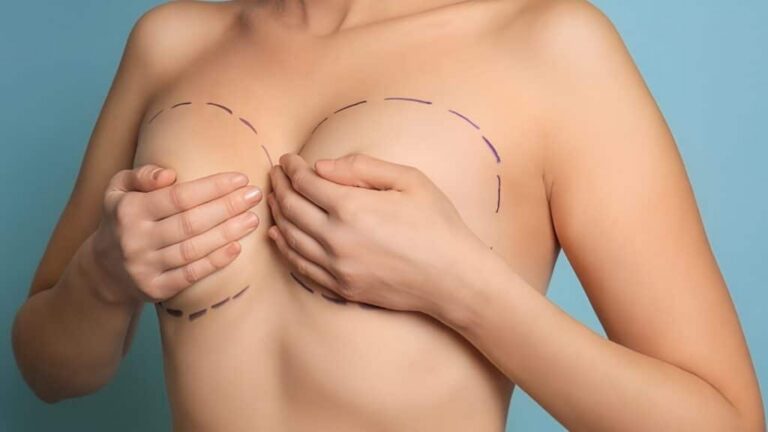
Breast implants aren’t designed to last a lifetime, so at some point most women with them will face the question of whether to leave them, swap them or take them out. A breast implant exchange replaces your existing implants with new ones, either because something has changed with the implants themselves or because you want a different look.
How Long Do Breast Implants Last

There’s no fixed expiry date. Implants are not lifetime devices, and surgeons are expected to tell patients at the first operation that further surgery may be needed at some point, as reflected in NHS evidence-based intervention guidance on breast implant removal.
Many people find they revisit the decision somewhere between 10 and 15 years after surgery, although some implants last considerably longer and others need attention sooner. Age alone isn’t a reason to operate, a problem or a change in what you want is.
Medical Reasons to Replace Implants
Some reasons are about your health and shouldn’t be left to drift. If you notice any of the following, it’s worth getting checked promptly.
Rupture or Deflation
An implant can rupture or deflate, which often shows as a change in size or shape. Some ruptures cause few obvious symptoms, so a change you can’t explain deserves an examination and, where needed, imaging.
Capsular Contracture
The body naturally forms a layer of scar tissue around any implant. If that layer tightens, the breast can become firm, painful or distorted. Treatment often involves removing part or all of the scar tissue as well as the implant, which makes the operation more involved than a simple swap.
Implants That Have Moved
Implants can shift over time, sitting too low, too far to the side or at an angle. Because the surrounding tissue often needs adjusting too, surgery in this situation is highly individual and may involve modifying the breast tissue as well as replacing the implant.
Cosmetic Reasons to Change Implants
Plenty of people exchange healthy implants simply because their body or preferences have changed. Pregnancy, weight fluctuation and ageing all alter the size and position of the breasts around an implant that stays the same.
You can move to a larger or smaller size, a different shape or profile, or a different implant material. Many patients also use the operation to upgrade to newer technology such as Motiva implants, which Prof. Hindocha can talk through at consultation. If you’re weighing up a first-time operation instead, breast augmentation covers the starting point.
Exchange, Lift or Removal
Swapping like for like isn’t always the best answer. If the breasts have dropped, a new implant alone can leave them sitting low, and combining the exchange with a lift usually gives a better shape. If you no longer want implants at all, they can be taken out without replacement.
| Option | Best Suited To |
|---|---|
| Exchange only | Healthy tissue, wanting new implants or a different size |
| Exchange with a lift | Breasts that have dropped or lost shape around the implant |
| Removal with a lift | Wanting to go without implants and restore a natural, lifted profile |
| Removal only | Wanting implants out with no other changes |
The combined options are set out on the pages for implant exchange with a lift and implant removal with a lift, and the separate post on what implant removal costs covers the removal side in more detail.
What a Breast Implant Exchange Involves
A breast implant exchange takes around three hours under general anaesthesia and is done as a day case, with no drains needed. Where possible, your existing scars are reused, so no new scarring is created. If new incisions are needed, they’re placed to keep them as discreet as possible.
Revision surgery can be more demanding than the original operation, because the scar capsule and the condition of the old implant have to be assessed as the operation goes on. It’s the reason to choose a surgeon who deals with revision cases regularly.
Recovery After Implant Surgery
| Timeframe | What to Expect |
|---|---|
| Week 1 to 2 | Follow-up appointments, rest, sports bra worn continuously |
| Week 2 to 3 | Return to desk-based and light work |
| Week 4 | Moderate activity, avoiding chest-focused exercise |
| Week 6 | Full return to exercise and heavy physical work |
Physically demanding jobs may need four to six weeks. Scars fade significantly over 12 to 18 months.
Will the NHS Pay for It
Only in specific circumstances. NHS guidance supports removal for rupture or leakage, severe capsular contracture, recurrent infection or fluid collection, and a rare lymphoma linked to implants. Replacement is generally limited to people whose implants were originally placed by the NHS, for example after breast cancer surgery.
If your implants were placed privately for cosmetic reasons, replacing them is normally self-funded. The final cost depends mainly on how involved the operation is, particularly whether scar tissue has to be removed or a lift is added, so a fixed price can only be given after assessment.
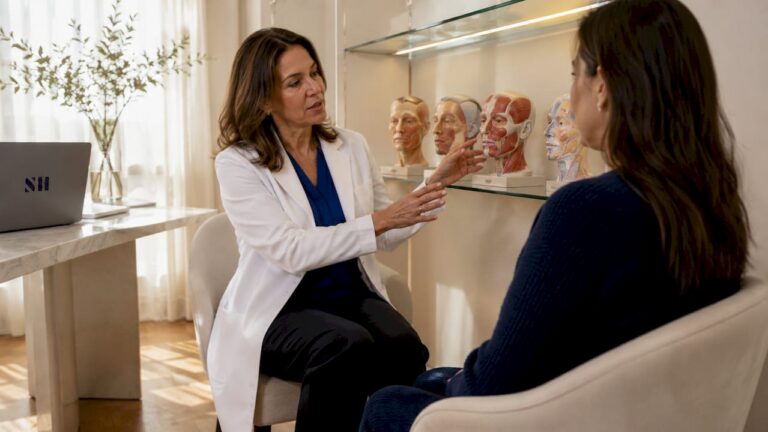
Implant Exchange With Prof Hindocha
Each exchange is planned around your anatomy, your existing tissue and what you want to change. The details of the procedure, including timings and recovery, are on the breast implant exchange page.
You may be a good candidate if your implants have ruptured, moved or hardened, or if your size preferences have changed, and you’re in good general health. If sagging is part of the picture, the breast lift page explains how a lift can be added.
Frequently Asked Questions
How often should breast implants be replaced?
There’s no set interval. Many people revisit the decision after 10 to 15 years, but healthy implants that you’re happy with don’t need replacing just because of their age.
What are the signs my implants need replacing?
Changes in size or shape, a breast that feels hard or painful, implants that have shifted position, or a visible deflation can all be signs. Some ruptures are silent, so any unexplained change is worth having examined.
Can I change to a different size of implant?
Yes. You can change size, shape, profile or material. Your surgeon will advise what suits your tissue and goals at consultation.
Is implant exchange more complex than the first operation?
It can be, because the scar capsule and the condition of the existing implant have to be assessed during surgery. That is why revision work is best done by a surgeon experienced in it.
Will an implant exchange leave new scars?
In most cases existing incisions are reused, so no extra scarring is created. Where new incisions are needed they are placed discreetly, and scars fade significantly over 12 to 18 months.
How long is recovery after replacing breast implants?
Most people return to light work within two to three weeks and to full exercise by around six weeks, wearing a sports bra throughout the early period.
If your implants are changing, causing problems or simply no longer suit you, book a consultation with Prof. Hindocha to talk through your options honestly.
This article is for general information only and does not constitute medical advice. Individual results vary, and suitability for any procedure can only be confirmed following an in-person consultation with a qualified, registered clinician.