Deciding to have cosmetic surgery is rarely just a physical decision. The weeks leading up to your procedure can bring a mix of excitement, doubt, and genuine anxiety that most people are not fully prepared for. Cosmetic surgery mental health preparation is not a box-ticking exercise. It is a genuine part of your surgical journey that shapes how you feel before, during, and long after recovery. This guide walks you through the psychological risks to know about, practical steps to get emotionally ready, and how to protect your mental wellness when it matters most.
Table of Contents
- Key takeaways
- Mental health risks in cosmetic surgery
- How to prepare mentally for surgery
- Managing the early postoperative period
- Building long-term mental wellness after surgery
- My perspective on mental preparation
- How Sandiphindocha supports your whole wellbeing
- FAQ
Key takeaways
| Point | Details |
|---|---|
| Anxiety before surgery is normal | Over 90% of patients report preoperative concerns, so preparing for this is part of responsible surgical planning. |
| Psychological screening saves outcomes | Standardised mental health screening before surgery reduces the risk of poor psychological results and missed conditions like BDD. |
| The first 72 hours are high risk | Early postoperative emotional distress is common and predictable. Planning for it reduces its impact significantly. |
| Realistic expectations are non-negotiable | Surgery changes your appearance, not your life circumstances. Misaligned expectations are the most common driver of postoperative dissatisfaction. |
| Ongoing mental wellness matters | Integrating psychological support with physical recovery leads to better long-term satisfaction and emotional stability. |
Mental health risks in cosmetic surgery
Most people focus their pre-surgery preparation on logistics. Who will drive them home, what to eat, when to stop taking certain medications. The psychological side gets far less attention, and that is where problems often begin.
Preoperative anxiety affects the vast majority of plastic surgery candidates. In a UK study of 122 patients, over 90% reported concerns before their procedure, with 16.4% experiencing insomnia the night before surgery due to worries about pain and outcomes. These are not minor inconveniences. Unmanaged anxiety before surgery can affect your physical recovery, your pain perception, and your satisfaction with results.
Body dysmorphic disorder and cosmetic surgery
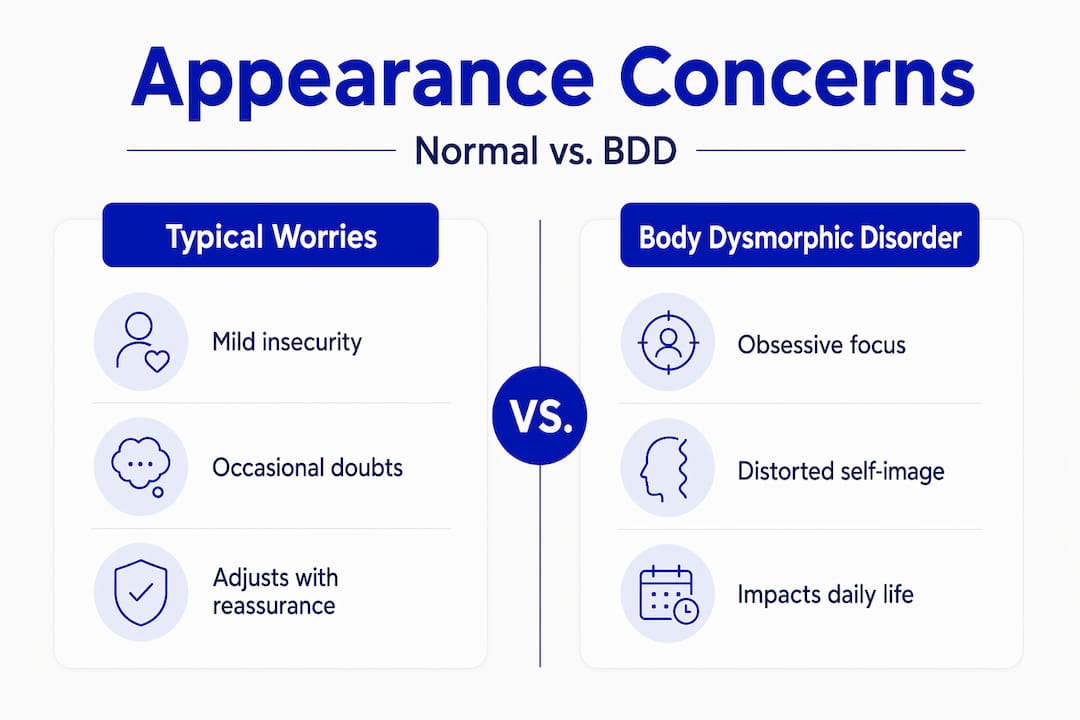
One of the most significant psychological risks in this space is body dysmorphic disorder, or BDD. This is a condition where a person becomes preoccupied with a perceived flaw in their appearance that others typically cannot see or consider minor. The critical point here is that BDD patients rarely benefit psychologically from cosmetic surgery. Their condition frequently worsens after a procedure, not improves. Surgery does not address the underlying cognitive distortion driving the distress.
If you find yourself fixating on a specific feature in a way that feels obsessive, seeking multiple opinions, or feeling that no result will ever be quite right, these are signs worth discussing with a mental health professional before booking any procedure.
Vulnerability factors worth knowing
Beyond BDD, there are other psychological patterns that increase risk. Women undergoing breast augmentation face higher suicide rates within this group, a finding that points strongly to pre-existing mental health vulnerabilities rather than surgery itself as the cause. This is not a reason to avoid surgery. It is a reason to take psychological assessment seriously.
Postoperative depression, emotional flatness, and identity disorientation are also more common than most people expect. The anticipation of a procedure can sustain mood for weeks, and when the swelling sets in and results are not immediately visible, that emotional lift disappears quickly. Knowing this in advance changes how you experience it.
How to prepare mentally for surgery
Getting emotionally ready for cosmetic surgery is not about achieving a state of perfect calm. It is about going in with clear eyes, realistic expectations, and a support structure in place.
- Request a psychological assessment. More than half of UK plastic surgeons do not routinely screen patients psychologically before surgery. Ask your surgeon directly whether psychological screening is part of their preoperative process. If it is not, consider seeking a referral to a counsellor or psychologist yourself before your procedure date.
- Set expectations with your surgeon, not just about the result. A good consultation covers more than surgical technique. A thorough patient consultation includes your mental health history, your motivations, and an honest discussion about what surgery can and cannot change. If your surgeon does not ask about these things, that is worth noting.
- Address underlying mental health conditions first. If you are currently managing depression, anxiety disorder, or obsessive patterns related to your appearance, work with your GP or therapist to stabilise these before proceeding. Surgery under psychological distress rarely produces the satisfaction you are hoping for.
- Manage your sleep in the two weeks before surgery. Given that insomnia the night before surgery is common and linked to poor recovery experience, building better sleep habits in advance makes a measurable difference. Limit screens after 9pm, keep a consistent sleep schedule, and avoid alcohol, which disrupts sleep architecture even when it feels like it helps.
- Build your support network deliberately. Decide in advance who you will talk to during recovery, who will be physically present, and how you will communicate if you are struggling. Isolation during recovery amplifies emotional distress.
Pro Tip: Write down your motivations for surgery before your consultation. If your reasons are primarily about pleasing someone else, escaping a life circumstance, or fixing something you cannot clearly articulate, these are worth exploring with a therapist before you proceed.
Emotional readiness should be evaluated as standard practice alongside physical health. Mental and physical preparations carry equal weight when it comes to positive surgical experiences.
Managing the early postoperative period
The first 72 hours after cosmetic surgery are, for many people, the hardest part of the entire process. Not because of pain alone, but because of the emotional disorientation that accompanies it.

You may not recognise yourself in the mirror. Swelling distorts results. Bruising can be alarming. The body image you expected to feel better about looks worse before it looks better. Psychological distress in the early postoperative window is well-documented and is a recognised high-risk period for emotional difficulty, impacting recovery and self-esteem.
What helps during this window
- Normalise the emotional response. Feeling tearful, flat, or anxious in the first few days is not a sign that something has gone wrong. It is a predictable physiological and psychological response to surgery, anaesthesia, and disrupted routine.
- Limit social media. Comparing your swollen day-three face to someone else’s polished six-week result is a reliable way to generate unnecessary distress.
- Keep communication lines open. Let your surgical team know if your emotional state is significantly affecting your ability to rest or function. Early psychoeducation and clear communication during recovery actively reduces the risk of emotional spiralling.
- Avoid making judgements about your results. Results at 72 hours are not results. Give your body the time it needs before drawing any conclusions.
Pro Tip: Before your surgery date, write yourself a short note reminding yourself that early recovery looks and feels difficult, and that this is temporary. Reading it during the hard days is more effective than you might expect.
Understanding the myths and realities of cosmetic surgery recovery can also help you set more accurate expectations for this period.
When to seek professional help
If low mood, anxiety, or distress persists beyond two weeks post-surgery, or if you are having intrusive thoughts about your appearance or the outcome, speak to your GP. This is not failure. It is responsible self-care.
Building long-term mental wellness after surgery
Getting through the early recovery period is one thing. Maintaining emotional wellbeing in the months that follow is another challenge entirely, and one that receives far less attention in most pre-surgery conversations.
- Keep your expectations anchored to reality. Surgery changes a specific physical feature. It does not change your relationships, your career, or your sense of self-worth. Patients who enter surgery expecting a life transformation are significantly more likely to report dissatisfaction, regardless of the technical quality of the result.
- Maintain your social connections. Isolation during recovery is common, and it compounds emotional difficulties. Stay connected with people who know you well and who are not primarily focused on your appearance.
- Integrate psychological care with physical recovery. If you were seeing a therapist before surgery, continue. If you were not, consider it during recovery. The psychological effects of cosmetic procedures extend well beyond the operating theatre, and having professional support available makes a real difference.
- Monitor your relationship with your results over time. It is normal to go through phases of loving and questioning your outcome. What is worth paying attention to is whether dissatisfaction becomes obsessive, or whether you find yourself researching further procedures before you have fully recovered from the current one.
- Celebrate the process, not just the outcome. Choosing to have surgery, preparing thoughtfully, and recovering with intention is itself a significant undertaking. Acknowledging that takes nothing away from the physical result.
My perspective on mental preparation
I have worked with patients at every stage of the cosmetic surgery process, and the single most consistent predictor of a positive experience is not surgical technique. It is how emotionally prepared a patient is before they arrive.
What I have found is that patients who struggle most are rarely those with the most complex procedures. They are the ones who came in hoping surgery would resolve something that surgery cannot touch. A relationship problem. A career dissatisfaction. A long-standing discomfort with themselves that goes deeper than the feature they wanted changed.
The uncomfortable truth is that surgery is not a mental health intervention. It can absolutely improve confidence and quality of life when the motivations are clear and the expectations are grounded. But it is not a shortcut past the harder work of understanding yourself.
What I encourage every patient to do is treat the psychological preparation as seriously as the physical preparation. Sleep well. Talk to someone. Be honest with your surgeon about your history. Ask the questions you are embarrassed to ask. A surgical team worth trusting will welcome every single one of them.
— Gregg
How Sandiphindocha supports your whole wellbeing

Choosing the right surgeon means choosing someone who sees the full picture, not just the procedure. At Sandiphindocha, Professor Sandip Hindocha takes a genuinely patient-centred approach to cosmetic and reconstructive surgery. That means thorough preoperative assessments, honest conversations about expectations, and a commitment to your emotional readiness as well as your physical health.
Whether you are considering a procedure for the first time or returning after previous surgery, the consultation process at Sandiphindocha is designed to give you the information, confidence, and support you need to make a well-considered decision. For patients requiring breast reconstruction or more complex procedures, that psychological dimension of care is built into every stage of the process.
Get in touch to arrange a consultation and experience what genuinely patient-focused surgical care looks like.
FAQ
What is cosmetic surgery mental health preparation?
Cosmetic surgery mental health preparation refers to the psychological and emotional steps taken before and after a procedure to improve outcomes and reduce the risk of distress. It includes managing anxiety, setting realistic expectations, and undergoing psychological screening where appropriate.
How common is anxiety before cosmetic surgery?
Very common. Research shows over 90% of patients report preoperative concerns, with a significant proportion experiencing sleep difficulties the night before surgery.
Can cosmetic surgery worsen mental health?
Yes, in some cases. Patients with body dysmorphic disorder are particularly at risk, as surgery rarely alleviates BDD symptoms and can make the condition worse. Pre-existing mental health vulnerabilities are the strongest predictor of poor psychological outcomes.
Should I see a therapist before cosmetic surgery?
If you have a history of anxiety, depression, or obsessive thoughts about your appearance, speaking to a therapist before surgery is strongly advisable. Even without a clinical history, a few sessions to clarify your motivations and expectations can significantly improve your experience.
How long does emotional recovery take after cosmetic surgery?
The first 72 hours carry the highest emotional risk, but mood fluctuations can continue for several weeks. Most patients stabilise emotionally within four to six weeks, though this varies depending on the procedure, individual personality, and the support available during recovery.