TL;DR:
- Breast reduction surgery primarily addresses physical symptoms like pain and skin irritation, not just appearance.
- It involves removing tissue, fat, and skin, then repositioning the nipple to achieve better proportion and relieve symptoms.
Breast reduction surgery is one of the most misunderstood procedures in plastic surgery. Many people assume it is a purely cosmetic choice, but for a significant number of patients, it is a functional health intervention that addresses chronic pain, skin irritation, and a quality of life that has been quietly eroded for years. Understanding what breast reduction surgery actually involves, from the operating theatre to the recovery room to the longer-term physical and emotional changes, is the first step towards making a genuinely informed decision.
Table of Contents
- Key takeaways
- How breast reduction surgery works
- Recovery and risks to know
- The real benefits of breast reduction
- Deciding if surgery is right for you
- My perspective on breast reduction surgery
- Considering breast reduction with Professor Sandip Hindocha
- FAQ
Key takeaways
| Point | Details |
|---|---|
| More than cosmetic | Breast reduction treats physical symptoms like back pain and skin rashes, not just appearance. |
| Surgical process | The procedure removes tissue, fat, and skin, then repositions the nipple to restore proportion. |
| Recovery takes time | Wearing a support bra for around two months and avoiding heavy lifting for four weeks is standard. |
| Real psychological gains | Patients consistently report improved confidence and comfort in daily life after surgery. |
| Eligibility matters | Timing, breast development, and medical history all influence whether surgery is appropriate. |
How breast reduction surgery works
Breast reduction surgery, known medically as reduction mammoplasty, removes excess breast tissue, fat, and skin to bring breast size into better proportion with the rest of the body. The goal is not simply aesthetic. For many patients, the surgery directly addresses macromastia, a condition where disproportionately large breasts cause measurable physical harm.
Before any surgery takes place, a thorough preoperative assessment is carried out. This covers breast size and shape, the stage of breast development, medical history, smoking status, and plans for future pregnancy or breastfeeding. Preoperative eligibility assessment also focuses carefully on nipple viability, because preserving sensation and blood supply to the nipple-areola complex is one of the most technically demanding aspects of the procedure.
The surgery itself is performed under general anaesthetic and typically takes three to four hours. During the operation, the surgeon removes tissue predominantly from the lower portion of the breast, reshapes what remains, and repositions the nipple higher on the breast mound. The incision pattern used depends on the amount of tissue being removed and the individual anatomy of the patient. Common patterns include the anchor or inverted-T incision, the vertical or lollipop incision, and, in some cases, a periareolar approach for smaller reductions.
Surgeons select their technique based on vascular anatomy and skin quality to maximise nipple viability and sensation. This is not a one-size-fits-all decision. The pedicle technique, which determines how the nipple retains its blood supply during repositioning, varies from patient to patient. Drains are commonly placed during surgery and removed once fluid output reaches a safe level, rather than on a fixed schedule.
Pro Tip: Ask your surgeon specifically which incision and pedicle technique they plan to use for you, and why. Understanding the reasoning behind their approach gives you a much clearer picture of your likely scar pattern and recovery.
Recovery and risks to know
Recovery from breast reduction surgery follows a broadly predictable timeline, though individual experience varies considerably. Here is what you can generally expect:
- Immediately after surgery: You will wake up with dressings in place, surgical drains, and a firm support bra. Pain and swelling are normal in the first few days.
- First two weeks: Most patients manage discomfort with prescribed pain relief and rest at home. Driving and returning to desk-based work typically becomes possible around this point.
- Weeks two to four: Swelling begins to reduce noticeably. Light activity resumes, but heavy lifting and strenuous exercise remain off limits.
- Up to two months: Wearing a support bra day and night for roughly eight weeks supports healing and helps the new breast shape settle correctly.
- Beyond three months: Final results become clearer as residual swelling resolves. Scars begin to fade, though full maturation takes up to two years.
For patients over 40, scheduling a mammogram after surgery is recommended to establish a new imaging baseline, since the altered breast tissue can affect how future scans are interpreted.
Risks are real and worth discussing openly with your surgeon before you commit. Sensory changes including numbness or reduced nipple sensation are among the most common, and while they often improve over time, they may be permanent in some cases. Scarring is unavoidable, and its appearance depends on the excision pattern used, your genetics, and how diligently you follow aftercare guidance. Patients with a tendency towards keloid or hypertrophic scarring need special consideration during planning. Other risks include infection, wound healing problems, asymmetry, and in rare cases, partial or full nipple necrosis.

Pro Tip: For practical advice on managing your recovery well, the post-surgery recovery guide from Professor Sandip Hindocha covers evidence-based steps you can take to support healing from the first day onwards.
The real benefits of breast reduction
The physical relief that follows breast reduction surgery can be almost immediate. Chronic back, neck, and shoulder pain caused by the weight of disproportionately large breasts often resolves within weeks of surgery. Bra strap grooves, skin rashes beneath the breast fold, and persistent posture problems are similarly addressed once the underlying load is removed.
Beyond the physical, the psychological shift is significant. Breast reduction improves self-confidence and body image in ways that patients often describe as reclaiming ownership of their own bodies. Many women report that they had spent years avoiding exercise, struggling to find clothes that fitted, or feeling self-conscious in social situations. After surgery, those barriers lift.
Key benefits patients consistently report include:
- Relief from chronic pain in the back, neck, and shoulders
- Reduction or elimination of skin rashes and irritation beneath the breasts
- Improved posture as the body no longer compensates for excess weight
- Greater comfort during physical activity and exercise
- Wider clothing choices and better fit
- Reduced self-consciousness and improved emotional wellbeing
“Many patients describe it not as a cosmetic change, but as finally feeling like themselves. The physical relief is often immediate, and the emotional benefits follow closely behind.”
Studies consistently show high patient satisfaction rates following breast reduction. Many patients experience near-immediate relief from physical symptoms post-surgery, which in turn positively affects confidence and lifestyle. This is not a procedure people regret at high rates. It is one of the highest-satisfaction operations in plastic surgery.
It is also worth noting that breast reduction is functional health care when breasts cause pain or limit activity. Framing it only as cosmetic does a disservice to the many patients for whom it is genuinely medically indicated.
Deciding if surgery is right for you
Not everyone who wants breast reduction surgery is ready for it, and not everyone who is ready has fully considered all the relevant factors. Here is a comparison of what surgery offers versus non-surgical alternatives:
| Factor | Breast reduction surgery | Non-surgical alternatives |
|---|---|---|
| Pain relief | Significant and often lasting | Partial and temporary |
| Skin irritation | Resolved by removing excess tissue | Managed but not eliminated |
| Permanence | Long-lasting results | Requires ongoing management |
| Recovery required | Yes, several weeks | Minimal downtime |
| Scarring | Present but fades over time | None |
| Clothing fit | Dramatically improved | Improved with correct fitting |
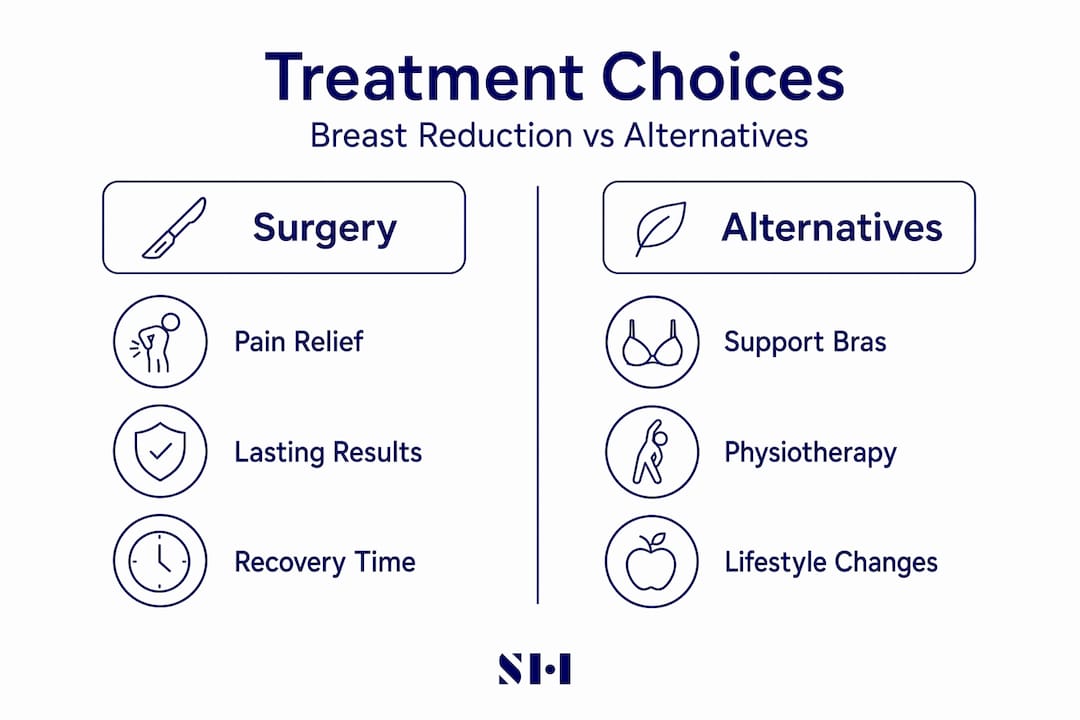
Non-surgical options such as professionally fitted bras, physiotherapy, and weight management can reduce symptoms for some patients. They are a reasonable starting point, particularly if surgery feels premature. However, for patients with moderate to severe macromastia, these measures tend to offer limited relief over the long term.
Timing matters too. Surgery is generally recommended once breast development is complete, typically in the early twenties, though exceptions exist. Future pregnancy and breastfeeding plans are worth discussing with your surgeon, as pregnancy can alter breast size and shape after surgery.
It is also worth understanding the difference between a breast reduction and a breast lift. A lift addresses sagging without significantly reducing volume. A reduction removes tissue and may incorporate lifting techniques. The two procedures overlap but serve different primary goals.
Psychological readiness matters as much as physical eligibility. Going into surgery with realistic expectations, a clear understanding of the trade-offs around scarring and sensation, and a support network for recovery makes a measurable difference to outcomes.
My perspective on breast reduction surgery
In my experience, the patients who feel most satisfied after breast reduction are those who came to the decision for themselves, not because someone else suggested it. The motivation needs to come from a genuine desire to address symptoms or discomfort that have been affecting daily life.
What I have observed over years of consultations is that many patients arrive having already lived with significant physical pain for far longer than they should have. They often minimise their symptoms, as though they do not deserve relief. Breast reduction is not indulgent. When breasts are causing chronic pain, limiting movement, and affecting mental health, surgery is a legitimate clinical response.
I have also seen how much clear preoperative communication changes outcomes. Patients who understand the likely scar pattern, the realistic recovery timeline, and the possibility of sensory changes are far better prepared. They recover with less anxiety and report higher satisfaction. The surgery itself is only part of the process. The conversation before it is equally important.
My honest advice: do not delay seeking a consultation because you are unsure whether your symptoms are “bad enough.” If large breasts are affecting your quality of life, that is reason enough to explore your options with a qualified surgeon.
— Sandip
Considering breast reduction with Professor Sandip Hindocha
If this article has helped clarify what breast reduction surgery involves, the next step is speaking with a surgeon who can assess your individual situation and give you a clear picture of what is realistic for you.

Professor Sandip Hindocha is a consultant plastic, reconstructive, and cosmetic surgeon with extensive experience in breast surgery. His breast reduction service page provides detailed clinical information on the procedure, including what to expect at consultation, surgical options, and recovery. For patients interested in related procedures, Professor Hindocha also offers nipple and areola reduction and breast lift surgery as part of a broader range of plastic surgery services. A consultation is not a commitment. It is an opportunity to ask the questions that matter most to you and make a decision grounded in accurate, personalised information.
FAQ
What does breast reduction surgery involve?
Breast reduction surgery removes excess breast tissue, fat, and skin under general anaesthetic, then repositions the nipple to restore proportion. The procedure typically takes three to four hours.
How long is the recovery from breast reduction?
Most patients wear a support bra for around two months and avoid heavy lifting for approximately four weeks. Full results, including scar maturation, take up to two years.
What are the main risks of breast reduction surgery?
Key risks include sensory changes such as numbness, scarring, infection, and in rare cases partial nipple necrosis. Most sensory changes improve over time but should be discussed thoroughly before surgery.
Who is a good candidate for breast reduction?
Good candidates are those whose breast development is complete, who have realistic expectations, and who experience physical symptoms such as back pain or skin irritation caused by disproportionately large breasts.
Is breast reduction surgery covered by the NHS?
NHS funding for breast reduction is available in some cases where the procedure is deemed medically necessary, but criteria are strict and waiting times can be long. Many patients opt for private surgery to access timely, tailored care.