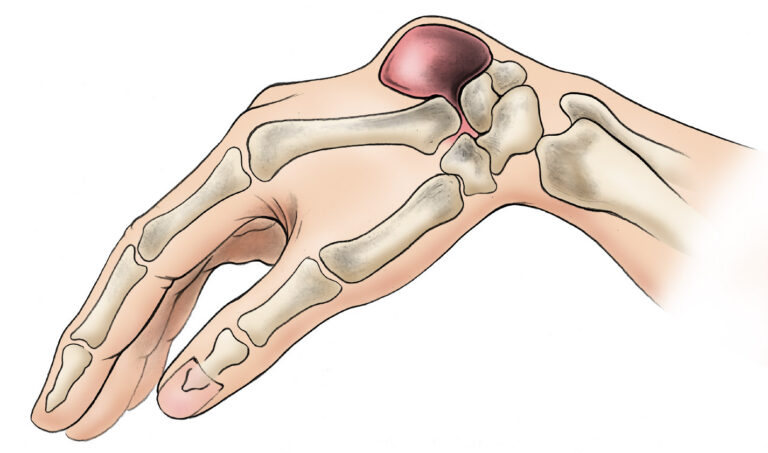
Dupuytren’s disease is a gradual thickening of the tissue under the skin of the palm, which can pull one or more fingers into a bent position. It is usually painless but can interfere with everyday tasks as it progresses.
How it develops
Firm nodules or cords form in the palm and may slowly tighten over months or years, drawing the fingers towards the palm. The ring and little fingers are most often affected. It tends to run in families.
When to consider treatment
Mild disease that does not affect function is often simply monitored. Treatment is considered when the finger can no longer be straightened (a common guide is when you cannot lay your hand flat on a table) or when it interferes with daily life.
Treatment options
Options range from less invasive techniques such as needle release of the cord, through to surgery that removes the diseased tissue for more advanced or recurrent contractures. The right choice depends on severity, which fingers are involved and previous treatment.
Recovery and outlook
Recovery varies with the technique; surgery typically involves hand therapy and splinting to restore movement. Dupuytren’s can recur over time, so follow-up matters. Early assessment helps you choose the right moment to act. Learn more on our hand surgery page or book a consultation.
Frequently Asked Questions
What is the table-top test for Dupuytren’s?
If you cannot lay your hand flat on a table because a finger stays bent, it is often a sign that treatment should be considered. It is a simple guide your surgeon will check.
Does Dupuytren’s disease always need surgery?
No. Mild disease that does not affect function is often just monitored. Treatment is considered when a finger cannot be straightened or daily tasks become difficult.
What are the treatment options?
They range from less invasive needle release of the cord to surgery that removes the diseased tissue. The best option depends on severity and which fingers are affected.
Can Dupuytren’s come back after treatment?
It can recur over time, as it is a progressive condition. Follow-up and hand therapy help maintain movement and manage any recurrence.
This article is general information and not a substitute for individual medical advice. Results vary between patients and all surgery carries risks. Always discuss your circumstances with a GMC-registered consultant surgeon.