A tummy tuck (abdominoplasty) removes excess abdominal skin and repairs separated muscles. Most people looking into it want to know two things above all, what the results actually look like, and what it’s likely to cost.
Neither has one fixed answer. Both depend on whether a full or mini procedure is right for you, how much correction is needed, and your individual starting anatomy. Prof. Sandip Hindocha, a GMC-registered plastic surgeon and member of BAAPS and BAPRAS, explains what genuinely drives both.
TL;DR: a full tummy tuck addresses the whole abdomen including muscle repair, while a mini tummy tuck treats a smaller area below the belly button with less downtime. Final results take several months to settle and the scar fades gradually over a year or more. Cost depends on which technique you need, whether it’s combined with liposuction or other procedures, the anaesthetist and the facility, so there’s no single price that applies to everyone. A tummy tuck is only funded on the NHS in exceptional medical circumstances.
What Results Actually Look Like After a Tummy Tuck

A tummy tuck flattens the abdomen by removing excess, often loose or stretched skin and repairing muscles that have separated, commonly after pregnancy or significant weight change. It reshapes the area rather than reducing fat throughout the body.
Realistic before-and-after results show a firmer, flatter profile and a visibly tighter waistline, not a change in overall body weight. People with more loose skin or muscle separation to start with tend to see the most dramatic difference.
Full Tummy Tuck vs Mini Tummy Tuck
There are two main versions of this procedure, and which one applies to you depends on how much skin and muscle needs addressing.
Full Abdominoplasty
A full tummy tuck treats the entire abdomen, above and below the belly button, including a complete repair of separated muscles across the midsection. The Abdominoplasty service page covers candidacy for this version in more detail.
Mini Abdominoplasty
A mini tummy tuck addresses a smaller area below the belly button through a shorter incision, without repositioning the navel. It suits people with a smaller amount of loose skin and little to no muscle separation, and generally involves less downtime.
| Version | Area Treated | Muscle Repair | Typical Downtime |
| Full tummy tuck | Above and below the navel | Full repair across the abdomen | Around six weeks |
| Mini tummy tuck | Below the navel only | Limited or none | Shorter, often one to two weeks less |
What the Scar Looks Like and How It Fades
A full tummy tuck leaves a horizontal scar running low across the abdomen, usually positioned to sit below the underwear or swimwear line, plus a smaller scar around the repositioned navel. A mini tummy tuck scar is shorter and sits in a similar low position.
Cleveland Clinic’s overview of tummy tuck surgery explains what the procedure and healing process typically involve in more clinical detail. Scars are permanent but generally soften and fade significantly over twelve to eighteen months with proper care.
When You’ll See Your Final Results
Swelling takes time to settle, so the abdomen usually looks tighter and more defined at the three-month mark than it does in the first few weeks. The fully settled result, once all residual swelling has resolved, typically isn’t visible until around six months to a year after surgery.
Patience matters here, an early post-operative photo will always look less flattering than the final outcome.
What’s Often Combined With a Tummy Tuck
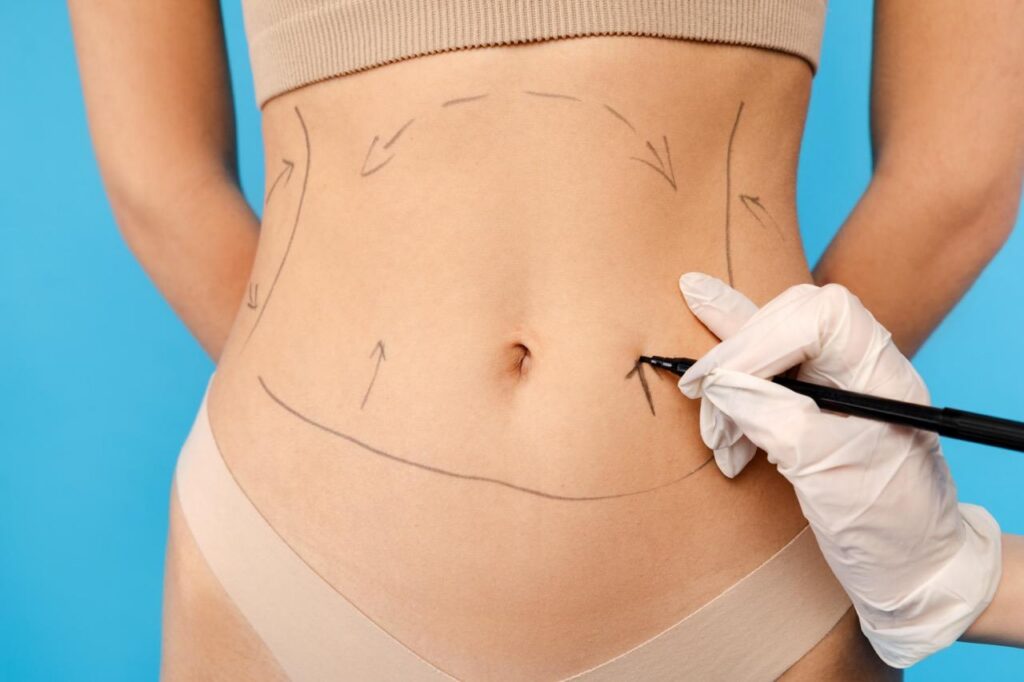
A tummy tuck is frequently performed alongside other procedures rather than on its own, depending on what someone is looking to address.
Liposuction, or Lipo-Abdominoplasty
Combining a tummy tuck with liposuction can refine the surrounding waist and flanks at the same time as the main procedure, giving a more complete contour than either treatment alone.
A Mummy Makeover
Where post-pregnancy changes affect the breasts as well as the abdomen, a tummy tuck is commonly one part of a mummy makeover, combining several procedures into a single recovery period.
What Determines the Cost of a Tummy Tuck
Price depends on genuine variables rather than one fixed figure. Whether a full or mini technique is needed, the extent of muscle repair, whether it’s combined with liposuction or another procedure, the anaesthetist’s fee, the facility, and the surgeon’s experience all play a part.
Because these variables differ so much from person to person, a meaningful price can only come from an in-person consultation rather than a number quoted in advance.
Is a Tummy Tuck Available on the NHS
Generally not, and NHS guidance on cosmetic procedures is explicit that abdominoplasty is treated as cosmetic surgery in almost all cases. Funding is only considered in exceptional circumstances, such as excess skin causing significant functional problems, and is assessed case by case through an individual funding request.
Anyone wanting to explore this route should speak to their GP first rather than assume either outcome.
What Should Be Included in a Private Quote
A transparent quote should set out the surgeon’s fee, the anaesthetist’s fee, hospital or theatre charges, your compression garment, and the standard follow-up appointments needed to monitor healing. The variables that affect pricing across procedures generally, and the questions worth asking before booking, are laid out in Understanding the Cost of Private Plastic Surgery in the UK.
Who Tends to Get the Best Results

People at a stable, healthy weight who have finished having children tend to see the most lasting results, since future pregnancy or significant weight change can undo the repair. Candidacy and what to expect if you’re weighing this up after pregnancy specifically is answered in full in Tummy Tuck After Pregnancy, Is Abdominoplasty Right for You.
Frequently Asked Questions
What’s the difference between a full and mini tummy tuck?
A full tummy tuck treats the whole abdomen and repairs muscle separation across the midsection, while a mini tummy tuck addresses a smaller area below the belly button with less downtime. Which one applies depends on how much skin and muscle separation is present.
Will a tummy tuck leave a visible scar?
Yes, a permanent scar is unavoidable with this procedure, positioned low on the abdomen so it’s generally hidden by underwear or swimwear. It typically fades significantly over twelve to eighteen months.
When will I see my final results after a tummy tuck?
The area looks noticeably better by around three months as swelling settles, but the fully final result usually isn’t visible until six months to a year after surgery.
Is a tummy tuck available on the NHS?
Only in exceptional circumstances where excess skin is causing significant functional problems, assessed case by case. It isn’t available for cosmetic reasons alone.
What determines the cost of a tummy tuck?
Whether you need a full or mini technique, the extent of muscle repair, whether it’s combined with liposuction or another procedure, the anaesthetist’s and surgeon’s fees, and the facility. A genuine figure only comes from a consultation.
Can a tummy tuck be combined with liposuction?
Yes, this combination is common and can refine the waist and flanks alongside the main abdominal repair, often giving a more complete result than either procedure alone.
Understanding what a tummy tuck can realistically achieve, and what genuinely drives the price, makes it easier to have a productive first conversation about your own case. Book a consultation to discuss what applies to you.
This article is for general information only and does not constitute medical advice. Individual results and costs vary, and suitability for any procedure can only be confirmed following an in-person consultation.