Most ganglion cysts on the wrist do not need surgery. They are harmless, fluid-filled lumps, and many settle by themselves over several months. Surgery is worth considering when a ganglion cyst on the wrist causes pain, tingling, numbness or restricted movement, or when it keeps coming back after draining.
What a Ganglion Cyst Is
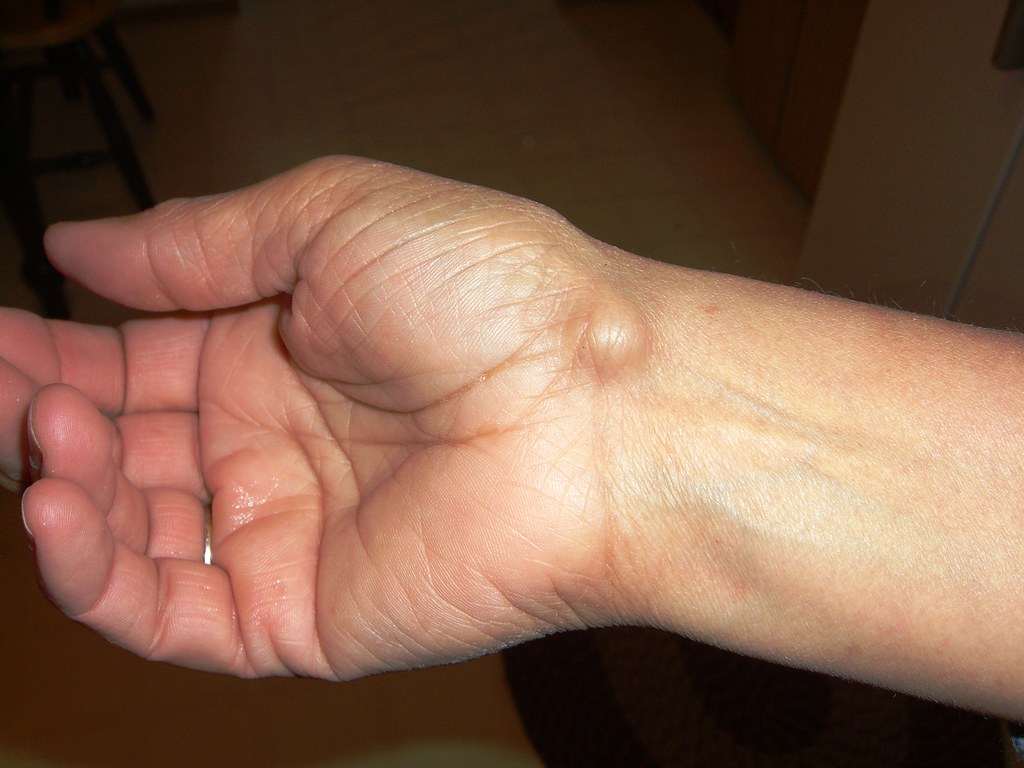
A ganglion is a round, fluid-filled lump that forms on or near a joint or tendon. The back or front of the wrist is the most common place, though they also appear on the fingers, ankle and foot. They are not cancerous and do not spread.
Why some people develop them and others do not is not fully understood. The NHS notes that some follow an injury that causes fluid to leak from a joint, and that they are much more common in women than in men.
When It Can Be Left Alone
According to the NHS, most ganglion cysts get better without treatment, although this can take several months to a year. A painless cyst that does not limit movement can reasonably be watched.
The NHS also advises not trying to burst or pop it, because that can cause infection or skin damage. If it aches, a wrist support or compression wrap and an anti-inflammatory painkiller such as ibuprofen can help, provided those are suitable for you.
When to Get It Checked
See your GP if you are worried about a lump, if it is getting bigger, or if it feels hard and does not move. A lump that is very painful, hot or red needs urgent attention, and redness can be harder to see on brown and black skin.
Symptoms that point towards treatment include pain, tingling or numbness in the hand or fingers, weakness or a noticeable loss of movement. These can happen when the cyst presses on a nearby nerve.
Treatment Options Compared
| Option | What it involves | Main drawback |
|---|---|---|
| Watchful waiting | No treatment, with a check if it changes | May take months to settle, or not at all |
| Aspiration | Fluid drained with a syringe under local anaesthetic | The stalk is left in place, so recurrence is more likely |
| Steroid injection | An injection to reduce swelling (listed by the NHS as an option) | Does not remove the cyst or its stalk |
| Surgical excision | Cyst and stalk removed under local anaesthetic | A small scar and a short recovery |
No option guarantees the cyst will never return. The NHS says a cyst usually does not come back once removed, but it sometimes can.
What Surgical Removal Involves
At this practice, removal is carried out under local anaesthetic, so you stay awake and go home the same day. A small incision is made over the cyst, and both the cyst and its stalk, the root connection to the joint or tendon sheath, are removed. The operation takes about an hour.
The wrist is crowded with nerves, tendons and blood vessels, so careful dissection to protect them matters as much as removing the lump. The full procedure is described on the ganglion cyst page.
Recovery After Surgery
Most people return to light desk-based work within one to two days. Moderate physical activity is typically possible within one to two weeks, and physiotherapy is not usually needed. Keep the wound clean and dry, and avoid getting it wet for the first week.
A follow-up at one week checks healing and reviews the sutures. A small scar remains, which fades and softens over several months.
Other Lumps and Hand Conditions
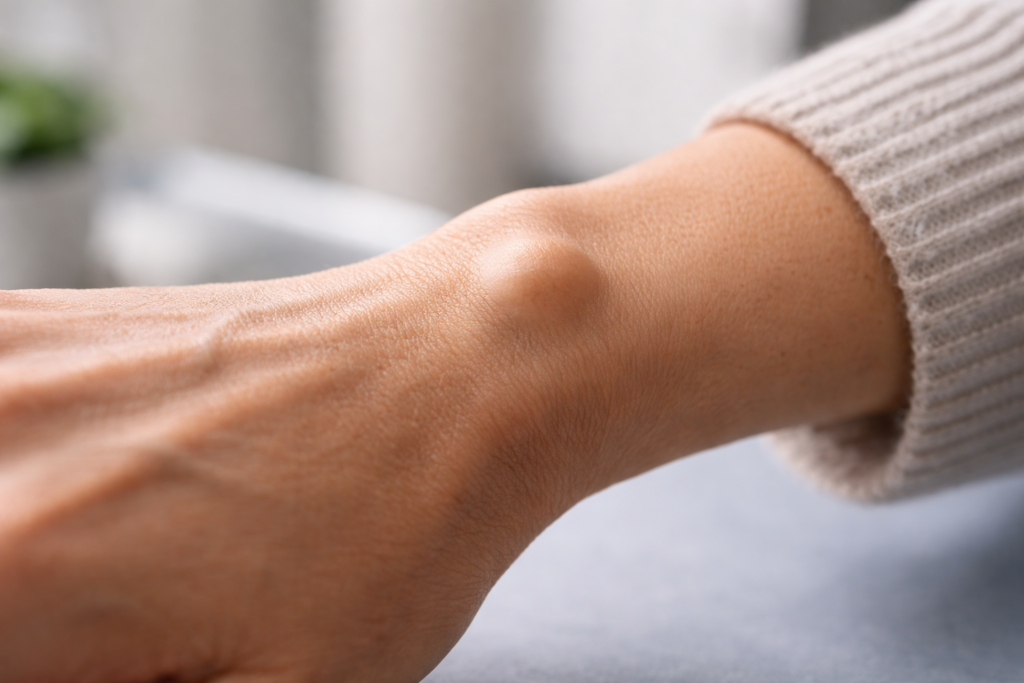
Not every lump in the hand or wrist is a ganglion, which is one reason an examination is worthwhile. Other conditions can cause thickening or lumps in the palm, such as the one covered in the post on Dupuytren’s disease and when to consider surgery, and the wider range is listed under hand surgery.
Frequently Asked Questions
Do all ganglion cysts need to be removed?
No. Many are painless and cause no problems, and most improve without treatment. Treatment is considered if the cyst causes pain, nerve symptoms or restricted movement.
Will a ganglion cyst go away on its own?
Often, yes. The NHS says most get better without treatment, though it can take several months to a year.
Can I burst a ganglion cyst myself?
No. Trying to burst it can cause infection or damage the skin, and the cyst is likely to return because its stalk remains.
Is draining a ganglion cyst enough?
Sometimes it helps, but draining leaves the stalk in place, so recurrence is more likely than after surgical removal.
Will I be awake during ganglion cyst surgery?
Yes. It is done under local anaesthetic, so the area is numbed, and you go home the same day.
Can a ganglion cyst come back after surgery?
It can, although it is less likely than after draining. If it does return, a further operation is possible.
If a lump on your wrist is causing symptoms or worrying you, book a consultation with Prof. Hindocha to confirm the diagnosis and talk through your options.
This article is for general information only and does not constitute medical advice. Individual results vary, and suitability for any procedure can only be confirmed following an in-person consultation with a qualified, registered clinician.