
Skin tags and warts are two of the most common skin concerns there are, and although people often lump them together, they’re genuinely different things caused by different processes. Both are almost always harmless, but that doesn’t mean every removal method people try at home is a good idea. Prof. Sandip Hindocha, a GMC-registered plastic surgeon and member of BAAPS and BAPRAS, explains what actually causes each one, which home approaches are genuinely fine versus genuinely risky, and when professional removal makes sense.
TL;DR: skin tags are small, soft flaps of skin that form where skin rubs against skin, they’re not contagious and don’t go away on their own. Warts are caused by a virus (HPV) and are contagious, and many do eventually clear up without any treatment at all, though this can take months or years. Some home approaches for warts have genuine evidence behind them, others, particularly cutting or tying off a skin tag yourself, carry a real risk of bleeding and infection. Professional removal is quick, low-risk and usually the most reliable option for either.
What Are Skin Tags
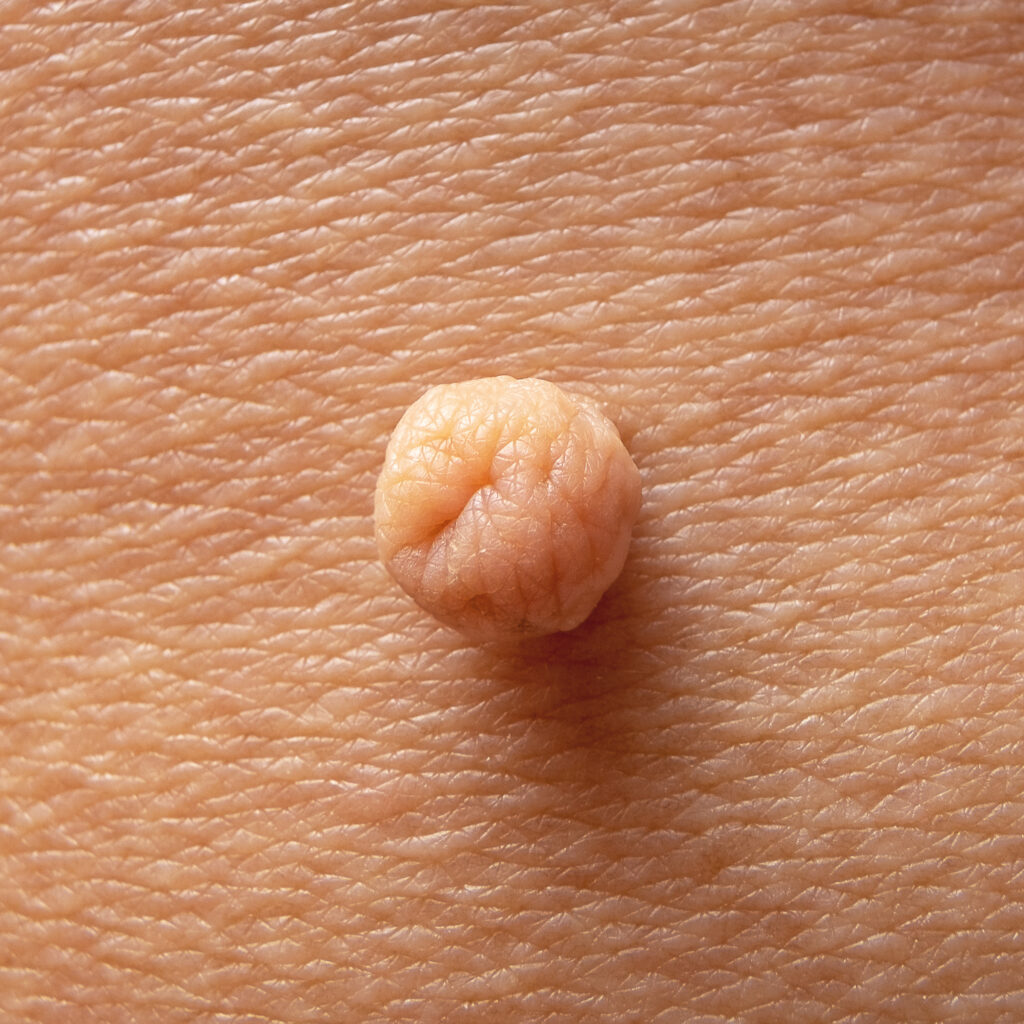
Skin tags are small, soft, skin-coloured growths made of loose collagen fibres and blood vessels, covered by a thin layer of skin. They form where skin repeatedly rubs against itself or against clothing, commonly the neck, armpits, groin, eyelids and under the breasts. They become more common with age, during pregnancy, and in people who are overweight or have insulin resistance.
Skin tags aren’t caused by a virus and aren’t contagious. They don’t turn into anything more serious, and left alone they simply stay the same size indefinitely rather than growing or resolving on their own.
What Are Warts
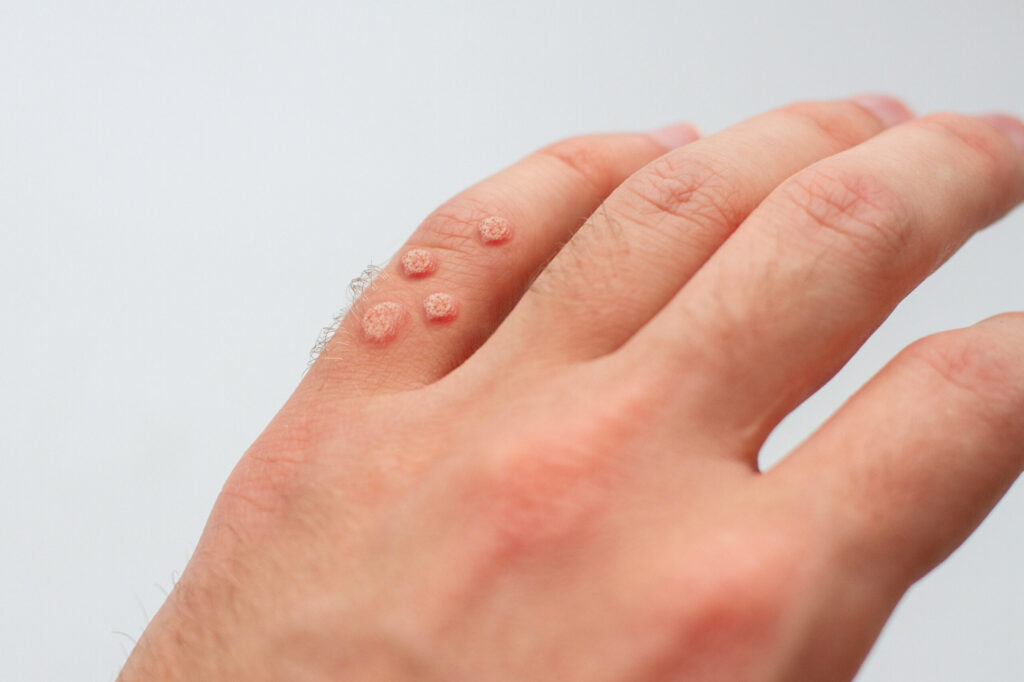
Warts are small, rough lumps caused by an infection with human papillomavirus (HPV), which infects the top layer of skin. Unlike skin tags, warts are contagious, spreading through direct skin contact or via contaminated surfaces like swimming pool floors and communal showers, which is why verrucas (warts on the sole of the foot) are so common among children and swimmers.
According to NHS guidance on warts and verrucas, many warts do eventually clear up on their own as the immune system fights off the virus, though this can take anywhere from several months to a couple of years, particularly in adults.
Skin Tags or Warts, How to Tell the Difference
Since the two are often confused, here’s how they typically compare.
| Skin Tags | Warts | |
|---|---|---|
| Cause | Skin friction and loose collagen, not a virus | HPV infection |
| Contagious | No | Yes |
| Texture | Soft, often on a thin stalk | Rough, firm, sometimes with small black dots |
| Common locations | Neck, armpits, groin, eyelids | Hands, fingers, soles of the feet |
| Goes away untreated | No, stays the same indefinitely | Often, but can take months to years |
Do Warts Go Away on Their Own
Often, yes, and this is worth knowing before rushing into any treatment. Since warts are caused by a virus, the immune system can eventually clear the infection without intervention. NHS advice notes this can happen within around six months in children, but often takes a year or two in adults. Skin tags, by contrast, won’t resolve on their own since there’s no infection for the body to clear.
Home Removal Methods, What Actually Works and What’s Risky
Not every home approach deserves the same level of scepticism, some genuinely have evidence behind them.
Over-the-counter salicylic acid treatments for warts are a legitimate, evidence-based option available from any pharmacy, and duct tape occlusion (covering a wart continuously for several days at a time) has some supporting evidence too, even if it’s modest. Pharmacy freezing kits can also work for some warts, though they’re generally weaker than the liquid nitrogen used professionally.
Where genuine caution is warranted is cutting or tying a thread around a skin tag yourself. This carries a real risk of bleeding, infection and an incomplete removal that just grows back, and it’s a particularly bad idea for anyone with diabetes or on blood-thinning medication. Apple cider vinegar and similar folk remedies also have no good evidence behind them for either skin tags or warts, and can cause skin irritation or chemical burns with repeated use.
When to See a Doctor Rather Than Treat It Yourself
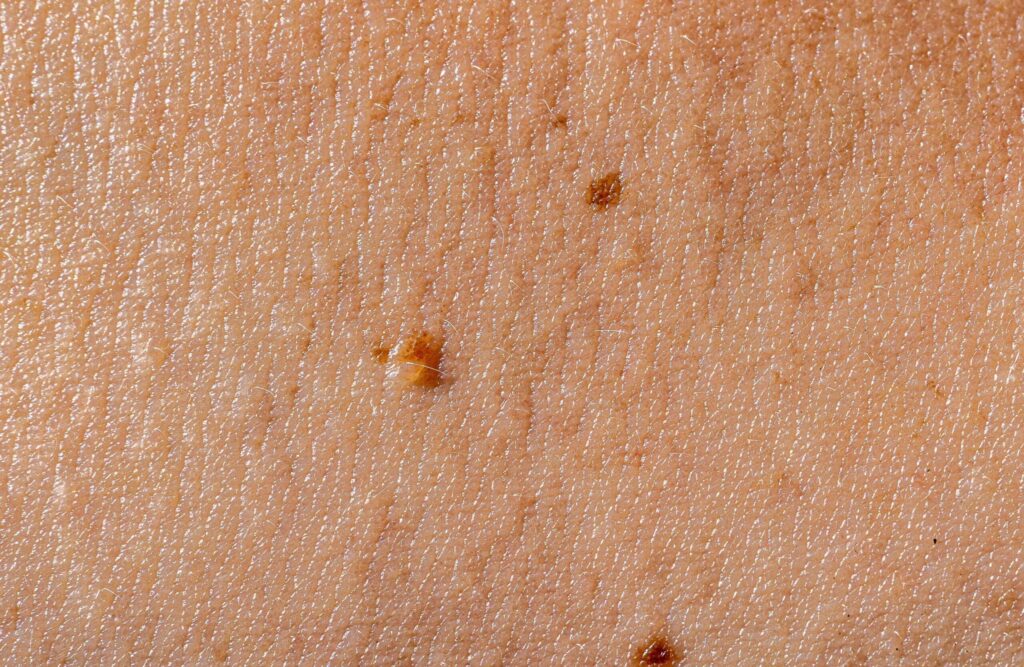
See a doctor rather than self-treating if a lesion is bleeding, growing quickly, changing colour or shape, painful, or if you’re simply not sure whether it’s a skin tag or wart at all rather than something else. This also applies if a skin tag catches repeatedly on clothing or jewellery and keeps bleeding as a result, which is a reasonable reason to have it properly removed rather than left alone.
Professional Removal Options
Professional removal is quick, done under local anaesthetic where needed, and avoids the guesswork and risk of a DIY approach.
| Method | Best For | What to Expect |
|---|---|---|
| Snip excision | Skin tags, especially stalked ones | Quick, minimal discomfort, usually no stitches needed |
| Cautery | Skin tags and some warts | Uses heat to remove the lesion and seal the area, done in one visit |
| Cryotherapy | Warts and verrucas | Liquid nitrogen freezes the lesion, may need more than one session |
| Curettage or laser | Larger or stubborn warts | More precise removal for lesions that haven’t responded to freezing |
Does Removal Hurt
Most professional removal methods are quick and only mildly uncomfortable, and local anaesthetic is used for anything more involved than a very small skin tag. Cryotherapy causes a brief stinging sensation as the area freezes, and the treated skin can be tender for a day or two afterwards, similar to a mild burn.
Will They Come Back After Removal
A specific skin tag or wart that’s been properly removed won’t grow back in that exact spot, but new skin tags can form elsewhere over time, particularly in the same friction-prone areas. Warts can also reappear if the virus is still present in nearby skin, since removing the visible lesion doesn’t always clear every trace of the infection in one go.
Could It Be Something Else, When a Skin Lesion Needs Checking
Most skin tags and warts are exactly what they look like, but any lesion that’s changing, bleeding without an obvious cause, has an irregular border, or looks noticeably different from a typical skin tag or wart is worth having properly assessed rather than assumed. Our Skin Cancer Surgery guide covers what to look out for and when a lesion needs a proper diagnosis rather than routine removal.
Skin Tag and Wart Removal With Prof Sandip Hindocha
Prof. Hindocha is a GMC-registered plastic surgeon and a member of both BAAPS and BAPRAS, with experience assessing and removing skin lesions safely, including confirming that a lesion is genuinely benign before treating it. Our Skin Surgery page covers the full range of minor skin procedures available, including lesion removal.
Frequently Asked Questions
Can I remove a skin tag at home safely?
Cutting or tying off a skin tag yourself carries a real risk of bleeding, infection and incomplete removal. Professional removal is quick, low-risk, and avoids these problems entirely, so it’s the safer choice for most people.
Do warts always need treatment?
Not necessarily. Many warts clear up on their own as the immune system fights off the infection, though this can take months to years, particularly in adults. Treatment is worth considering if a wart is painful, spreading or bothering you cosmetically.
Is duct tape actually effective for warts?
There’s modest evidence supporting duct tape occlusion for some warts, applied continuously over several days at a time. It’s not guaranteed to work, but it’s a reasonable low-risk option to try before considering professional removal.
Will removing a wart stop it spreading?
Removing the visible wart reduces the chance of spreading it to other parts of your body or to other people, though it doesn’t guarantee the virus is completely gone from surrounding skin, which is why a wart can occasionally reappear nearby.
Whether it’s a single stubborn skin tag or a wart that hasn’t responded to anything you’ve tried, a quick assessment is usually all it takes to sort out the right removal method. Book a consultation with Prof. Hindocha to have it properly looked at and removed.
This article is for general information only and does not constitute medical advice. Individual results vary and suitability for any procedure can only be confirmed following an in-person consultation. If a lesion is bleeding, growing quickly or changing in appearance, seek medical advice rather than treating it yourself.