
Breast reduction scars are permanent, but their pattern, size and how visible they end up depends on the technique used and how your skin heals. Genetics plays a real role too, alongside good aftercare. Prof. Sandip Hindocha, a GMC-registered plastic surgeon and member of BAAPS and BAPRAS, performs breast reduction regularly and explains what the scars typically look like, what affects visibility, and what actually drives the cost of surgery.
TL;DR: most breast reduction scars follow either an anchor (inverted-T) pattern or a vertical, lollipop-shaped pattern, chosen based on how much tissue needs removing. Scars move through three healing phases over roughly a year to two, becoming progressively less noticeable. Cost depends on the extent of surgery, the anaesthetic, the surgeon’s experience and the facility, so there’s no single figure that applies to everyone. Breast reduction is only available on the NHS in specific medical circumstances, not for cosmetic reasons.
What Breast Reduction Scars Look Like Straight After Surgery
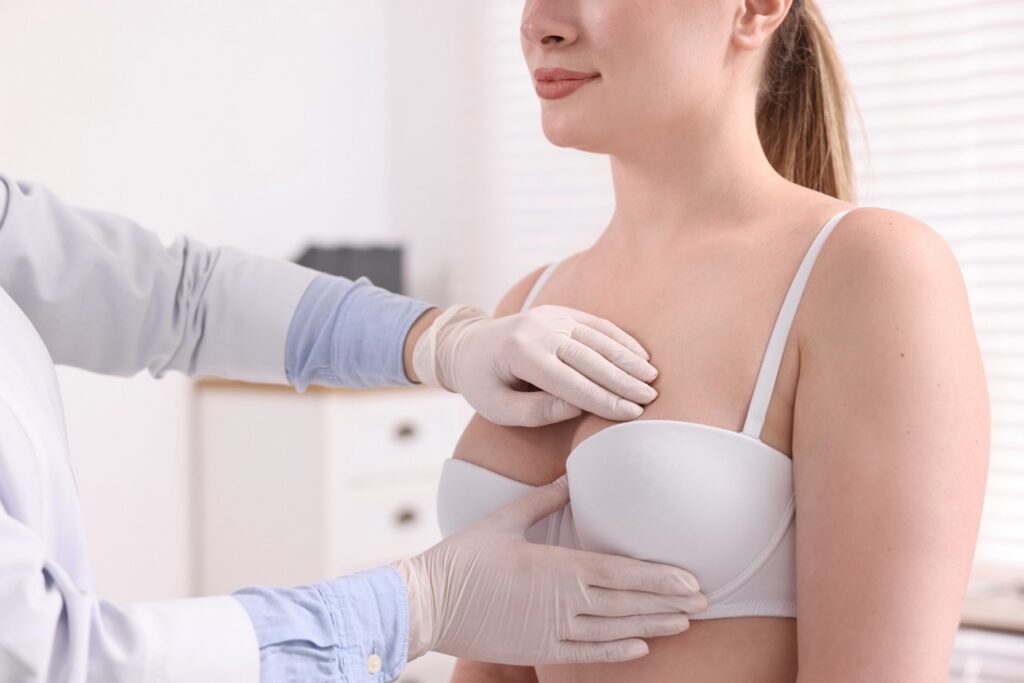
Immediately after surgery, scars are pink or red, slightly raised, and firm to the touch. This is completely normal and not a sign that anything has gone wrong, it’s simply the earliest stage of how any surgical wound heals.
The final position and shape of the scars follows the incision pattern your surgeon used, which is planned around how much tissue is being removed and how the breast needs reshaping.
Anchor vs Vertical (Lollipop) Incisions, Which One You’ll Have
There are two incision patterns used for most breast reductions. An anchor (inverted-T) pattern runs around the areola, vertically down to the breast crease, and along the crease itself, and is typically used for larger reductions. A vertical, or lollipop, pattern only runs around the areola and straight down to the crease, suiting more moderate reductions with good skin elasticity.
| Technique | Incision Pattern | Best Suited To |
|---|---|---|
| Anchor (inverted-T) | Around areola, down to crease, along crease | Larger reductions, more skin to remove |
| Vertical (lollipop) | Around areola, straight down to crease | Moderate reductions, good skin elasticity |
Which pattern applies to you is decided at consultation, based on your starting size, how much tissue is coming out, and your skin’s elasticity, not a fixed choice made in advance.
The Three Stages of Scar Healing
Surgical scars, including breast reduction scars, heal in three recognised stages rather than settling all at once.
The Inflammatory Phase, the First Week
The area is red, swollen and tender as the body begins repairing the wound. This is the most sensitive stage and the one where following aftercare instructions matters most.
The Proliferative Phase, Weeks One to Six
The scar can look raised, pink and firm during this stage as new tissue forms. It looks more obvious now than it will later, which surprises some patients, but this is a normal part of healing rather than a lasting result.
The Remodelling Phase, Months Two to Twenty-Four
Scars gradually flatten, soften and fade over this much longer stretch. Cleveland Clinic’s guide to breast reduction scars explains this staged healing process in more clinical depth, including how long full maturity typically takes. Our week-by-week recovery guide covers the broader recovery timeline alongside scar healing specifically.
What Affects How Visible Your Scars Will Be
Genetics has a real influence here. Some people’s skin naturally forms finer, flatter scars, while others are more prone to thicker or raised scarring regardless of how well the surgery goes.
The surgical technique itself matters too. A careful closure and an incision pattern appropriate to your anatomy both play a part in how the scar ultimately settles.
Scar Care That Genuinely Helps
Not smoking is one of the most significant factors within your control, since smoking measurably slows wound healing and worsens scarring. Protecting scars from direct sun exposure for the first year also helps prevent them darkening permanently.
Wearing your surgical garment as instructed and avoiding tension on the healing wound both support a better result. Silicone-based scar treatments are sometimes recommended once wounds have fully closed, which your surgeon will advise on at your follow-up appointments.
What Breast Reduction Is Often Combined With

Breast reduction is sometimes carried out alongside other procedures, depending on what you’re looking to achieve.
Areola Resizing
Most breast reduction techniques already reshape and resize the areola to suit the new breast proportions as a standard part of the procedure. Where areola size is a specific concern on its own, our Nipple and Areola Reduction page covers this in more detail.
A Breast Lift for Sagging
If sagging is also present, a breast lift can be combined with reduction in a single procedure. This addresses position as well as size, rather than leaving sagging unresolved after the reduction alone.
What Determines the Cost of Breast Reduction
Cost depends on several genuine variables rather than a single fixed number. How much tissue needs removing and which incision pattern that requires affects theatre time. Whether the procedure is combined with a lift or areola resizing, the anaesthetist’s fee, the facility’s charges, and the surgeon’s experience all factor in as well.
There’s no honest way to quote a figure that applies to everyone without knowing these details, which is exactly why a genuine price only comes from an in-person consultation.
Is Breast Reduction Available on the NHS
Sometimes, but only in specific circumstances. NHS guidance on breast reduction explains that funding depends on your local integrated care board’s criteria, and is generally only available where large breasts are causing documented physical problems such as back, neck or shoulder pain, or skin irritation, not for cosmetic preference alone.
Even where criteria are met, NHS waiting times for this procedure can be lengthy. Anyone wanting to explore NHS eligibility should start with their GP rather than assuming either way.
What Should Be Included in a Private Quote

A properly itemised quote should cover the consultation, the surgeon’s fee, the anaesthetist’s fee, hospital or theatre charges, your surgical garment, and the standard follow-up appointments needed to check healing. Our broader guide to the cost of private plastic surgery in the UK explains what a transparent quote should include across any procedure, and the questions worth asking before you commit to one.
Frequently Asked Questions
Will breast reduction scars fade? Yes. They move through three healing stages, starting red and firm before gradually flattening and softening over roughly twelve months to two years. They don’t disappear completely, but they usually become far less noticeable.
What’s the difference between anchor and vertical breast reduction scars? An anchor scar runs around the areola, down to the breast crease and along the crease itself, and is generally used for larger reductions. A vertical, or lollipop, scar only runs around the areola and down to the crease, suiting more moderate reductions.
How can I minimise visible scarring after breast reduction? Not smoking, protecting scars from direct sun exposure and following your surgeon’s aftercare advice all genuinely help. Some of this is also down to your individual skin and genetics, which no aftercare routine can fully override.
Is breast reduction available on the NHS? Only in specific circumstances, generally where large breasts are causing documented physical symptoms such as back or shoulder pain, and criteria vary by local NHS area. It isn’t available on the NHS for cosmetic reasons alone.
a
What determines the cost of breast reduction? The extent of tissue removal, the technique required, the anaesthetist’s and surgeon’s fees, the facility, and whether it’s combined with another procedure such as a breast lift. A genuine figure can only be given after a consultation.
Does breast reduction cost more if combined with a breast lift? Combining the two usually costs more than reduction alone, since it involves more surgical time, but it can also be more efficient than having two separate procedures. This is worth discussing directly at consultation.
Whether you’re weighing up scarring, cost, or both, the right next step is a proper assessment of your case. Book a consultation with Prof. Hindocha to discuss what applies to you.
This article is for general information only and does not constitute medical advice. Individual results and costs vary, and suitability for any procedure can only be confirmed following an in-person consultation.