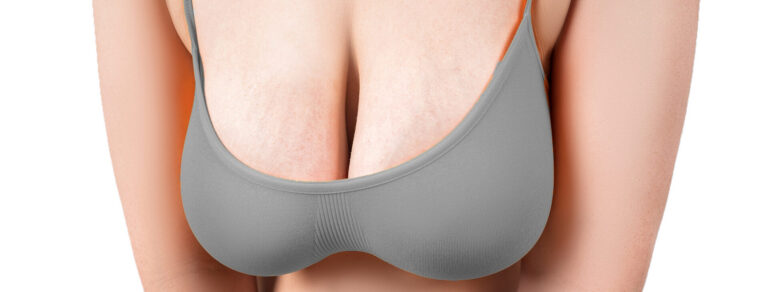
Breast fold surgery repositions the crease where the underside of the breast meets the chest, known as the inframammary fold. When that line sits too low or sits at different heights on each side, it changes the shape and position of the whole breast, even if the breast itself hasn’t changed.
Prof. Hindocha performs it on its own or alongside other breast surgery, depending on what’s causing the problem and what you’d like to change.
What the Inframammary Fold Does
The fold defines the lower edge of the breast and helps set the angle between the breast and the chest wall. Surgeons describe it as a key landmark for breast shape, which is why a research review on surgical restoration of the inframammary fold treats its position as central to a good aesthetic result.
When the fold is where it should be, the breast sits naturally on the chest. When it moves, the breast can look low, flat at the bottom or uneven against the other side.
Why the Fold Moves

Ageing, weight changes and pregnancy can all let the fold descend over the years, and it doesn’t always move equally on both sides.
Previous breast surgery is another common cause. Implants can stretch the lower part of the breast and push the fold down over time, a problem often described as the implant sitting too low or “bottoming out”. It is one of the reasons some people end up considering breast implant exchange.
Signs the Fold May Be the Problem
It can be hard to tell whether the issue is the fold, the breast tissue or the implant, so these are prompts for a consultation rather than a diagnosis.
| What You Notice | What It Can Point To |
|---|---|
| Breast sits lower than it used to | A fold that has descended with age, weight change or pregnancy |
| One fold lower than the other | Uneven descent, which can show as asymmetry |
| Implant looks too low or flat at the bottom | Fold that has dropped after implant surgery |
| Nipple points upwards on the breast | Breast tissue sitting too low relative to the nipple |
How Breast Fold Surgery Is Done
Breast fold surgery involves precise incisions along the fold, so the crease can be moved to a more youthful and anatomically correct position. The approach is tailored to whether the fold has dropped evenly or unevenly.
On its own it takes around two hours under local anaesthesia as a day case, so you go home the same day. Surgeons use several ways of supporting a repositioned fold, including stitches and the body’s own tissue, and which is best depends on your anatomy.
Combining It With Other Breast Surgery
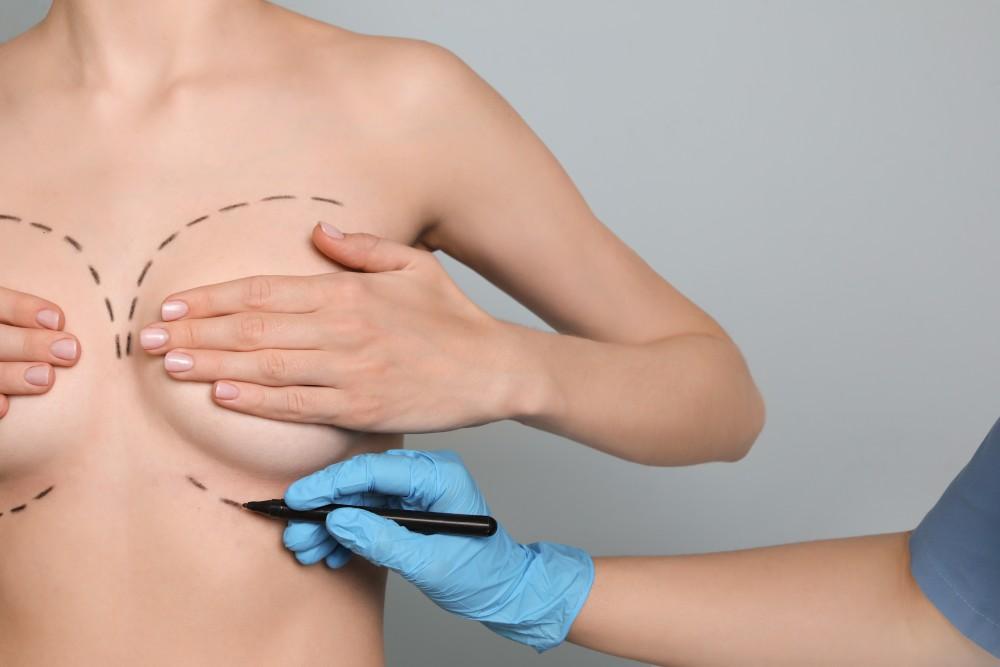
Fold correction is often part of a larger operation, because a lowered fold frequently goes hand in hand with other changes in the breast.
With Breast Augmentation
Adjusting the fold during breast augmentation gives the implant a more natural position and a better defined lower pole.
With a Breast Lift
A dropped fold often accompanies sagging, and pairing the two means both the crease and the lifted shape are restored together. The reasons for sagging are covered under breast lift.
With Breast Reduction
Repositioning the fold during a breast reduction makes sure the smaller breast sits correctly on the chest wall.
Where the real problem is a difference between the two sides, the fold may be only one part of the plan, as discussed in the post on causes of breast asymmetry and how it is treated.
Recovery
| Timeframe | What to Expect |
|---|---|
| Week 1 | First follow-up, rest while swelling and bruising settle |
| Week 1 to 2 | Return to desk-based and light work, avoiding lifting |
| Week 2 | Moderately physical work, with most swelling gone |
| Week 4 to 6 | Gym and heavy activity, final shape becoming clear |
If fold surgery is combined with other procedures, recovery follows the longer operation, so your timeline is confirmed at consultation.
Who Is a Good Candidate
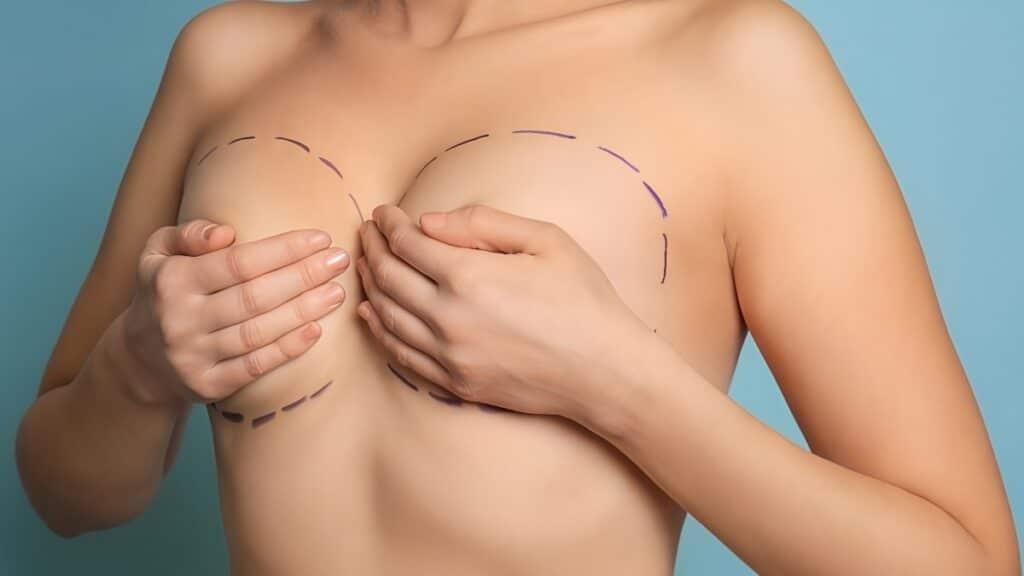
Good candidates are in sound general health, have realistic expectations and have a noticeable drop or unevenness of the fold that affects breast shape or confidence. A clinical examination is the only way to confirm that the fold, rather than the breast tissue or implant, is the real issue.
Breast Fold Correction With Prof Hindocha
A consultation covers your history, a physical assessment of the fold and any asymmetry, and a plan that sets out technique, recovery and whether combining procedures makes sense. Details of the procedure itself are on the breast fold surgery page.
Frequently Asked Questions
What is the inframammary fold?
It is the natural crease where the underside of the breast meets the chest wall. Its position helps define the lower shape of the breast.
Why does the breast fold drop?
Ageing, weight changes, pregnancy and previous breast surgery can all lower the fold, and implants can stretch the tissue below the breast over time. It may drop more on one side than the other.
Can breast fold surgery be done with other procedures?
Yes, it is often combined with augmentation, a lift or a reduction in one operation. Your surgeon will advise which combination suits you.
Is breast fold surgery done under general anaesthetic?
On its own it is performed under local anaesthesia as a day case. Combined operations may need a different anaesthetic, which is agreed beforehand.
How long is recovery after fold surgery?
Most people return to light work within one to two weeks and to the gym and heavy activity by four to six weeks.
Are the results permanent?
Repositioning gives a durable improvement, but breasts continue to age and change with weight and pregnancy, so no result is guaranteed to stay fixed for life.
If your breasts sit lower than you’d like or look uneven underneath, book a consultation with Prof. Hindocha for an honest look at whether fold correction would help.
This article is for general information only and does not constitute medical advice. Individual results vary, and suitability for any procedure can only be confirmed following an in-person consultation with a qualified, registered clinician.