Axillary reduction surgery removes the sweat glands responsible for excessive underarm sweating, offering a permanent alternative to the injections and antiperspirants many people cycle through for years. Very few UK clinics publish a price for it: Centre for Surgery in London lists £2,950 for both underarms, and the real figure depends on the technique used and how much gland tissue needs treating.
Prof. Sandip Hindocha is a GMC-registered plastic surgeon and a member of both BAAPS and BAPRAS. This guide walks through what the surgery actually removes, what’s worth trying first, what drives the price, and what recovery involves.
What Axillary Reduction Surgery Actually Involves
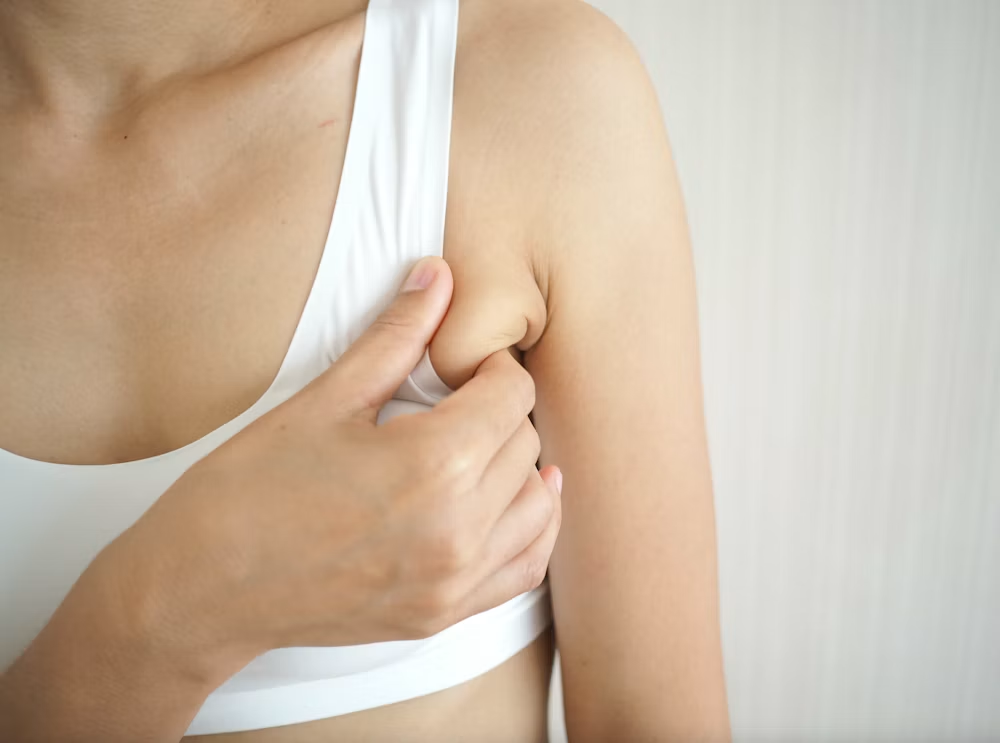
Most patients considering axillary reduction have primary axillary hyperhidrosis, sweating that’s disproportionate to temperature or exertion and concentrated in the underarms. The surgery, usually done as suction curettage under local anaesthetic, removes 80 to 90% of the sweat glands in that area through small incisions.
Complete removal of every gland isn’t the goal, or even possible, but removing the bulk of them is generally enough to bring sweating down to a manageable level permanently, unlike treatments that need repeating.
Non-Surgical Options Worth Trying First
Surgery isn’t usually the first step. Prescription-strength aluminium chloride antiperspirants are the standard starting point, and for people whose sweating doesn’t respond to those, botulinum toxin injections are a licensed treatment that temporarily blocks the nerve signal to the sweat glands.
The catch with injections is that they wear off, typically after four to six months, meaning the cost repeats indefinitely. MiraDry, a microwave-based device that destroys sweat glands non-surgically, is another option some clinics offer, though results are generally less complete than surgical removal.
Axillary reduction tends to make the most sense for people who’ve already been through this step ladder and want a one-off procedure rather than an ongoing routine.
Who Is Actually a Good Candidate
Good candidates have persistent, primary underarm sweating that hasn’t settled with antiperspirants or injections, and no underlying medical cause driving it (secondary hyperhidrosis linked to another condition needs that condition addressed first, not surgery).
General good health matters for any procedure under anaesthetic, and realistic expectations matter here specifically. A meaningful, lasting reduction is realistic, total dryness generally isn’t.
What Determines Axillary Reduction Cost
The technique used is the main driver. Suction curettage, the most common approach, is generally less expensive than more involved gland-excision techniques that remove skin as well as glands, which take longer and leave a different scar pattern.
Surgeon experience and whether the procedure is done under local or general anaesthetic also affect the figure. As general market context and not a quote from Prof. Hindocha, Centre for Surgery’s price list, checked on 5 October 2026, gives £1,950 for one underarm, £2,950 for both under local anaesthetic with sedation, and £3,950 for both under general anaesthetic. It is the only UK clinic we found that publishes its own price for this operation, so there is no wider market range to quote. A breakdown of what should be included in any quote, for this or any procedure, is covered on the cost of private plastic surgery in the UK page.
How Long Do the Results Last
Unlike antiperspirants or botulinum toxin injections, the glands that are removed don’t grow back, so the reduction is permanent for that treated area. Some patients notice sweating gradually creeping back over years as the remaining, untreated glands become more active, but this is the exception rather than the rule.
This is generally the deciding factor for people weighing up the upfront cost against years of repeat botulinum toxin appointments.
Recovery Timeline

Expect bruising, swelling and some tenderness under the arms for the first one to two weeks, with restricted arm movement recommended in the meantime to let the area settle. Most people return to desk-based work within a few days to a week.
Exercise and anything that raises the arms above shoulder height usually needs to wait three to four weeks. Final results, once swelling has fully resolved, are typically clear by around six to eight weeks.
Risks and Possible Side Effects
Bruising, swelling and temporary numbness under the arms are common and settle on their own. Compensatory sweating, where other areas of the body sweat more to make up for the reduction, is possible but rare with this procedure specifically.
That’s a genuinely different risk profile to the older sympathectomy technique (cutting the nerves that control sweating), which carries a much higher rate of compensatory sweating elsewhere on the body. Axillary reduction works locally on the glands themselves, so it doesn’t touch the nerve pathway that causes that.
Is Axillary Reduction Available on the NHS
Rarely. NHS pathways for hyperhidrosis generally start with prescription antiperspirants, then botulinum toxin injections where those have failed or aren’t suitable, and surgical options including sweat gland removal are not routinely commissioned.
Where funding is considered at all, it’s assessed case-by-case by the local Integrated Care Board, usually only after the conservative step ladder has genuinely been exhausted, so this is worth raising with a GP before assuming private treatment is the only route.
Axillary Reduction Surgery With Prof Hindocha
Prof. Hindocha is a GMC-registered plastic surgeon and a member of both BAAPS and BAPRAS, and talks patients through where they genuinely sit on the treatment step ladder before recommending surgery over a non-surgical option.
Frequently Asked Questions
How much does axillary reduction cost in the UK?
As general market context, the one UK clinic we found that publishes its own price, Centre for Surgery, lists £2,950 for suction curettage of both underarms. The exact figure depends on the technique used and the surgeon’s experience, and a genuine quote needs an in-person consultation.
Is axillary reduction permanent?
The sweat glands that are removed don’t grow back, so the reduction in that area is permanent for most people. A small number notice some sweating returning gradually over years as remaining glands become more active.
Does axillary reduction cause compensatory sweating?
It’s possible but rare. This is a genuinely lower risk than with sympathectomy, an older, more invasive nerve-cutting procedure, because axillary reduction works locally on the underarm glands rather than the nerve pathway.
What should I try before considering surgery?
Prescription-strength aluminium chloride antiperspirants are usually the first step, followed by botulinum toxin injections if those don’t work well enough. Surgery tends to suit people who’ve been through both and want a permanent result.
How long is recovery after axillary reduction?
Most people return to desk-based work within a few days to a week, with strenuous activity and raising the arms overhead avoided for three to four weeks. Final results are usually clear by six to eight weeks.
Is axillary reduction available on the NHS?
Rarely. NHS hyperhidrosis pathways generally work through antiperspirants and botulinum toxin injections first, and surgical gland removal isn’t routinely commissioned, though it’s assessed case-by-case by the local Integrated Care Board.
If years of antiperspirants and repeat injections haven’t given you the result you want, a permanent option might be worth discussing. Book a consultation with Prof. Hindocha to talk through what’s realistic for you.
This article is for general information only and does not constitute medical advice. Individual results vary, and suitability for any procedure can only be confirmed following an in-person consultation with a qualified, registered clinician.