Otoplasty, also known as ear pinning or ear reshaping surgery, corrects prominent, asymmetrical or misshapen ears. It’s one of the more established procedures in plastic surgery, but the price varies more than most people expect, since it depends on the clinic, the surgical approach, the type of anaesthetic used, and whether one ear or both need treating. Prof. Sandip Hindocha, a GMC-registered plastic surgeon and member of BAAPS and BAPRAS, explains what actually drives otoplasty cost and what a fair, transparent quote should include.
TL;DR: otoplasty cost mainly depends on whether one or both ears need correcting, whether the procedure is done under local or general anaesthetic, and what’s actually included in the quoted price, such as the consultation, the ear support band, and follow-up appointments. Purely cosmetic otoplasty in adults isn’t funded by the NHS, though limited exceptions exist for children. A genuine, personalised quote can only be given after an in-person consultation.
What Determines the Cost of Otoplasty
A few things influence the final price more than any other factor. First is whether one ear needs correcting or both, since operating on a single ear takes less time and fewer resources than a bilateral procedure. Second is the surgical approach required, straightforward pinning for prominent ears is usually quicker than the more involved reshaping needed for uneven size, shape or scarring. Third is the anaesthetic type, covered in more detail below. And the surgeon’s experience and reputation plays a part too, as it does with any surgical procedure, more experienced consultant surgeons in established practices typically charge accordingly.
Local Anaesthetic or General Anaesthetic
Adults having otoplasty often have a genuine choice between local and general anaesthetic, whereas children are almost always treated under general anaesthetic since it isn’t reasonable to expect a child to stay still and comfortable during surgery. General anaesthetic tends to cost more than local, mainly because it requires an anaesthetist’s fee and additional theatre time for monitoring and recovery. Some adults prefer general anaesthetic anyway, simply to avoid being aware during the procedure, and that’s a reasonable choice to make even though it does affect the overall price.
One Ear or Both Ears
This is one of the simplest factors to understand, but people often assume otoplasty automatically means both ears. Treating a single ear costs less than treating both, and it’s a genuine option for anyone whose asymmetry only affects one side. Some patients only need one ear corrected to bring it in line with the other, rather than reshaping an ear that was already a reasonable shape and position.
Is Otoplasty Available on the NHS
Purely cosmetic otoplasty in adults is generally not funded on the NHS. There are limited exceptions for children with prominent ears causing significant psychological distress or bullying, where NHS funding may occasionally be possible following an assessment and a GP referral, though this varies by local area and isn’t guaranteed. If NHS funding is something you want to explore for a child, the right first step is speaking to your GP rather than assuming either way.
What Should Be Included in the Price
A properly quoted private otoplasty price should be clear about what it actually covers, not just a headline number. This typically includes the initial consultation, the surgeon’s fee, the facility or theatre fee, the anaesthetist’s fee if general anaesthetic is used, the ear support band worn during recovery, and the follow-up appointments needed to check healing. Rather than focusing on a single figure that may not reflect your particular case, our broader guide to understanding the cost of private plastic surgery in the UK explains what a transparent quote should include across any procedure, and the questions worth asking before you commit to one.
Questions Worth Asking Before You Book
Before booking any otoplasty procedure, it’s worth asking a few direct questions. Is the quoted price fixed or an estimate that could change on the day. Does it include the ear support band and the follow-up appointments, or are these charged separately. What happens, cost-wise, if a revision is needed later. And is the surgeon actually listed on the GMC Specialist Register in plastic surgery, rather than simply holding a general medical qualification. Our guide on how to check a plastic surgeon’s credentials covers exactly what to look for and why it matters, regardless of which procedure or clinic you’re considering.
Otoplasty With Prof Sandip Hindocha
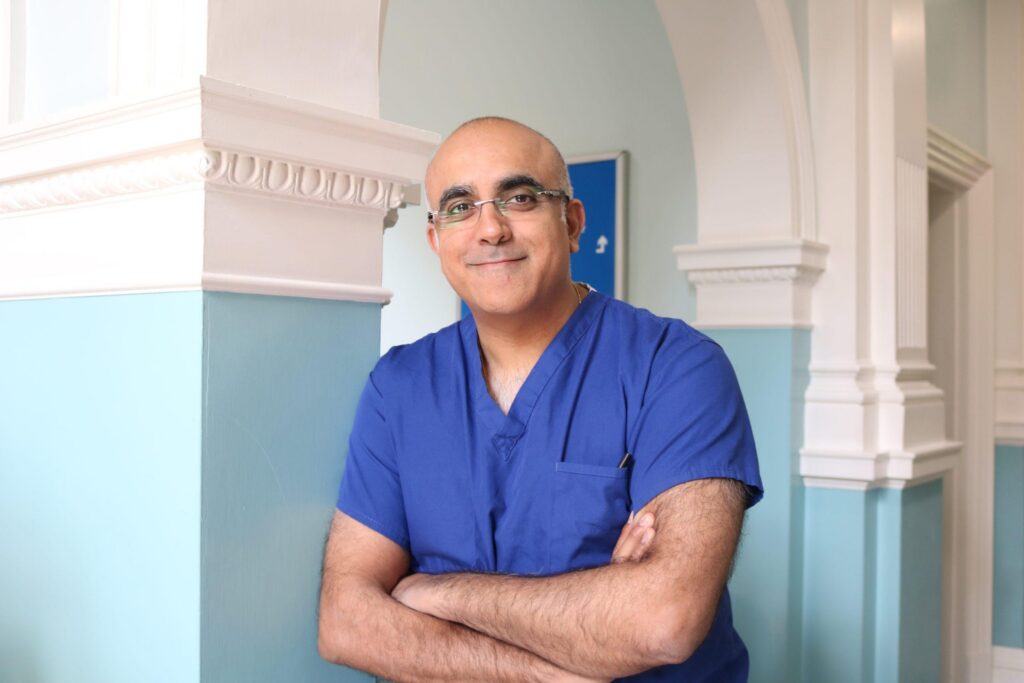
Prof. Hindocha is a GMC-registered plastic surgeon and a member of both BAAPS and BAPRAS, with experience treating both children and adults for otoplasty. Rather than applying one standard technique to every patient, he assesses each ear individually and plans surgery around the specific shape, size and degree of correction needed. This is also the same skill set used for ear surgery (otoplasty) more broadly, where you can read about candidacy, the procedure itself and the expected recovery timeline in full.
Frequently Asked Questions
How much does otoplasty cost in the UK?
There’s no single fixed price, since cost depends on whether one or both ears are treated, the anaesthetic used, and what’s included in the quote. A personalised figure can only be given after an in-person consultation, where your specific case is properly assessed.
Is otoplasty available on the NHS?
Purely cosmetic otoplasty in adults generally isn’t funded by the NHS. Limited exceptions can apply for children experiencing significant psychological distress from prominent ears, assessed case by case through a GP referral.
Does the cost of otoplasty include the ear band and follow-up appointments?
It should, but this varies by clinic, so it’s worth asking directly before booking. A properly quoted price typically includes the consultation, the surgeon’s fee, the ear support band, and the follow-up visits needed to check healing.
Is otoplasty cheaper for children than adults?
Not necessarily. Children are almost always treated under general anaesthetic, which tends to cost more than the local anaesthetic some adults choose, so the age of the patient alone doesn’t determine the price.
Does local anaesthetic reduce the cost compared to general anaesthetic?
Generally yes, since general anaesthetic requires an anaesthetist’s fee and additional theatre time that local anaesthetic doesn’t. Not every adult patient is a suitable candidate for local anaesthetic though, so this is discussed individually at consultation.
Otoplasty cost depends entirely on your specific ears, your anaesthetic preference, and what you actually need corrected, which is exactly why a genuine quote can only come from an in-person assessment rather than a number on a website. Book a consultation with Prof. Hindocha to discuss your case and get a clear, itemised price.
This article is for general information only and does not constitute medical advice. Prices mentioned are for general context only and do not represent a quote from this practice. Individual results and costs vary, and suitability for any procedure can only be confirmed following an in-person consultation.