Mallet finger is an injury that leaves the tip of a finger drooping and unable to straighten on its own. Most cases heal without an operation, but only if the finger is splinted straight and continuously for six to eight weeks. Prof. Sandip Hindocha is a consultant plastic and hand surgeon who treats finger and tendon injuries.
What Mallet Finger Is
The extensor tendon runs along the back of the finger and lifts the fingertip. In a mallet injury, that tendon is stretched or torn at the end joint, or it pulls a small fragment of bone away where it attaches.
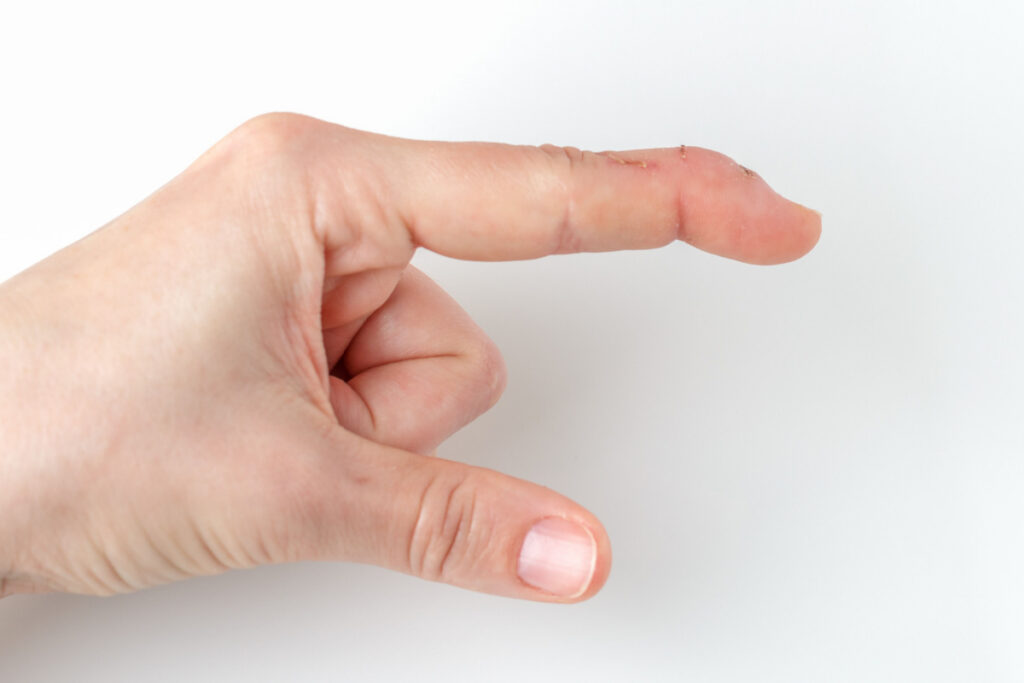
The result is a fingertip that sits bent down and cannot be actively straightened, even though you can usually still bend it. It looks minor, but the way it is treated in the first weeks decides how well the finger ends up working.
How It Happens
It typically happens when the fingertip is forced downward while the finger is straight. A ball hitting the tip is the classic example, which is why it is common in sport, but it also follows everyday knocks such as catching a finger while making a bed or in a door.
Because the force is small and the moment is quick, many people do not realise they have injured a tendon. They assume the finger is jarred and wait for it to settle, which is one of the main reasons the injury is treated late.
Symptoms and What to Do Straight Away
The main sign of a mallet finger is not being able to straighten the end joint of the finger, often with pain and swelling. NHS guidance from nidirect advises getting the finger splinted at a minor injuries unit as soon as possible. Until then:
- keep the hand raised to limit swelling
- take off any ring on the injured finger before it swells
- use simple painkillers if they are suitable for you
- do not keep testing whether the tip will lift
Tendon or Bone, Two Types
A tendinous mallet finger is a tear of the tendon alone, so an X-ray looks normal. A bony mallet finger is when the tendon pulls a fragment of bone away, which does show on an X-ray.
Both look the same from outside, with the same drooping tip. The distinction matters because it guides the splint plan and tells us whether the joint is stable, so an X-ray is worth having even when the finger looks straightforward.
The Splint and Its Rules
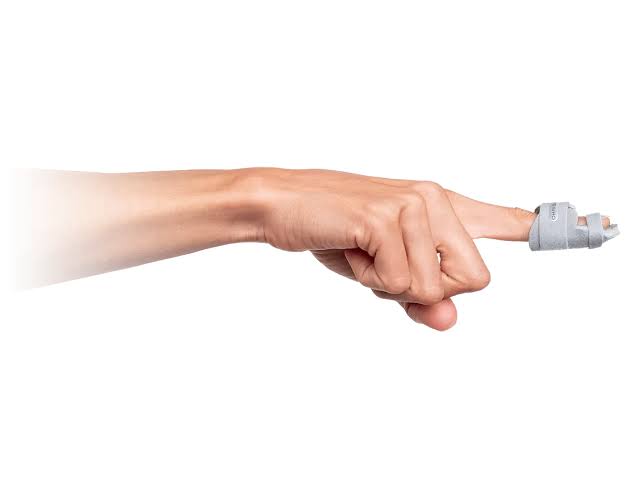
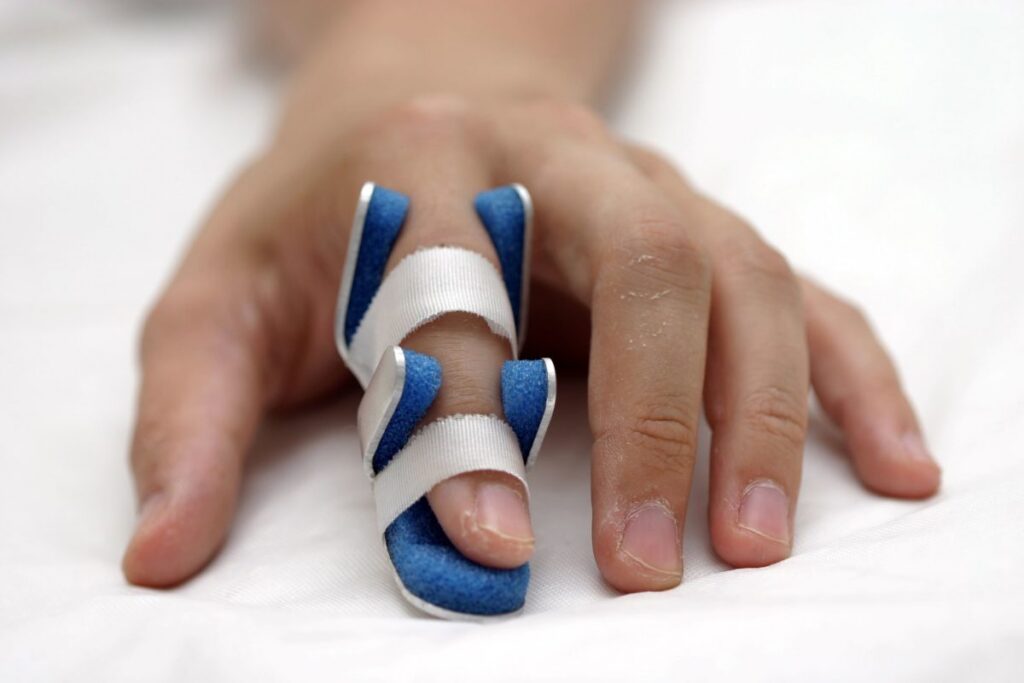
The splint holds the end joint straight, or very slightly bent backwards, while the tendon or bone fragment heals. The middle joint is usually left free. It is worn day and night for six to eight weeks.
The key rule is that the end joint must never bend while the splint is in use. The tendon heals by forming scar tissue across a small gap, and a single droop can pull that gap open and set the healing back. A patient leaflet from East Kent Hospitals gives the same warning.
Practical points that help:
- keep the splint and skin dry, using a plastic bag when you shower
- if skin care is needed, rest the finger flat on a table so the tip stays supported and straight, and follow the routine your clinician gave you
- if the splint loosens, cracks or becomes painful, get it checked rather than leaving it
How the Weeks Typically Run
| Stage | What to expect |
|---|---|
| Week 1 | Splint fitted and checked, with an X-ray if not already done |
| Weeks 2 to 4 | Strict splinting, with no bending of the end joint |
| Weeks 4 to 6 | Light or desk-based work is usually possible with the splint on |
| Weeks 6 to 8 | Splinting stops once healing is confirmed |
| After the splint | Night-time splinting for up to four more weeks may be advised, with exercises to prevent stiffness |
When Surgery Is Needed
Most mallet finger treatment does not involve surgery. It is considered in particular situations:
- a bone fragment involving more than a third of the joint surface, or a joint that has become unstable
- an open injury with a cut over the tendon
- a full course of splinting that has not worked
- a job or lifestyle that makes continuous splinting unrealistic
- an injury that was missed and presents weeks or months later
The Surgical Options
| Option | What it involves |
|---|---|
| Tendon repair | A small incision over the back of the finger to reattach the extensor tendon |
| Wire fixation | Two fine wires pass through the bones to hold the end joint straight while it heals, then are removed in clinic |
At this practice surgery is done under local anaesthetic as a day case and takes about an hour. Wires are usually removed at around six to eight weeks, and immobilisation matters just as much after an operation as without one. The mallet finger surgery page covers the options in more detail.
Recovery and What to Expect
With the right mallet finger treatment, most people get a finger that works well. Some are left with a small lag, where the tip does not quite straighten, or a small bump over the joint. Redness and tenderness over the joint are common for three to four months, then usually settle.
Full movement can take several months to return. Hand physiotherapy after the splint phase helps with stiffness and with regaining extension strength, and contact or gripping sports should wait until the finger is strong enough to avoid re-injury. Smoking raises the risk of healing problems and infection.
If the Injury Was Missed or Treated Late
A mallet finger seen weeks after the injury is harder to correct, but it is still worth having assessed. Splinting may still help in some late cases, and surgery is an option when the droop affects function or the joint has become stiff in the wrong position.
It is also a different injury from the palm-side tendon problem described on the jersey finger page, so the right diagnosis comes first. Other finger problems are listed under hand surgery.
Frequently Asked Questions
What causes mallet finger?
A blow or bend that forces the fingertip downward while the finger is straight, damaging the extensor tendon or pulling off a small piece of bone.
Can mallet finger heal without surgery?
Yes, in most cases, as long as a splint keeps the end joint straight continuously for six to eight weeks.
How long do I wear a mallet finger splint?
Usually six to eight weeks day and night, followed in some cases by up to four weeks of night-time splinting.
What happens if I take the splint off?
If the tip bends, the healing tissue can be pulled apart and the process may need to restart. Ask your clinician how to handle washing safely.
When is surgery needed for a mallet finger?
For a large or unstable bone fragment, an open wound over the tendon, failed splinting, or a late-presenting injury.
Will my finger look normal again?
Often, yes. A small droop or bump over the joint can remain, but the finger usually works well.
If your fingertip has dropped after an injury, book a consultation with Prof. Hindocha as soon as you can, so the splint can go on early.
This article is for general information only and does not constitute medical advice. Individual results vary, and suitability for any procedure can only be confirmed following an in-person consultation with a qualified, registered clinician.