Laser skin resurfacing uses focused light energy to treat skin concerns such as fine lines, sun damage, pigmentation, acne scarring and uneven texture. It can improve skin quality, but it is not a single treatment, and how much downtime you have depends heavily on which type of laser is used. Prof. Sandip Hindocha, a consultant plastic surgeon, offers laser as part of a wider range of non-surgical skin treatments.
How Laser Resurfacing Works
Each laser is set to a wavelength that is absorbed mainly by one target in the skin, such as water, melanin (pigment) or haemoglobin (the red in blood vessels). That is why one laser can be suited to brown age spots and another to thread veins.
The absorbed energy creates a controlled area of heat injury. The skin’s healing response then takes over, clearing damaged tissue and, for some lasers, laying down new collagen over the following weeks and months.
Ablative and Non-Ablative Lasers Compared
The most useful distinction to understand before you book is whether a laser is ablative or non-ablative. It affects how much the skin changes, how many sessions you need and how long you will look red or raw afterwards.
Ablative lasers, such as CO2 and erbium, remove the outer layers of skin. Non-ablative lasers heat the deeper layers without breaking the surface. Many modern devices are fractional, meaning they treat a grid of tiny columns and leave healthy skin in between, which helps the skin heal faster.
| Feature | Ablative (e.g. CO2, erbium) | Non-ablative |
|---|---|---|
| What it does | Removes the outer layers of skin | Heats deeper layers, surface left intact |
| Typical sessions | Often one to three | Usually a course of several |
| Downtime | Around one to two weeks of healing, longer for deeper treatments | Usually a few days of redness |
| Strength of change | More noticeable from fewer sessions | More gradual |
| Pigment risk in darker skin | Higher | Lower, though still assessed |
An overview from Johns Hopkins Medicine on laser resurfacing notes that healing after a deeper ablative treatment can take four to six weeks, while non-ablative treatments usually need four to six sessions with much shorter recovery.
What It Can Treat
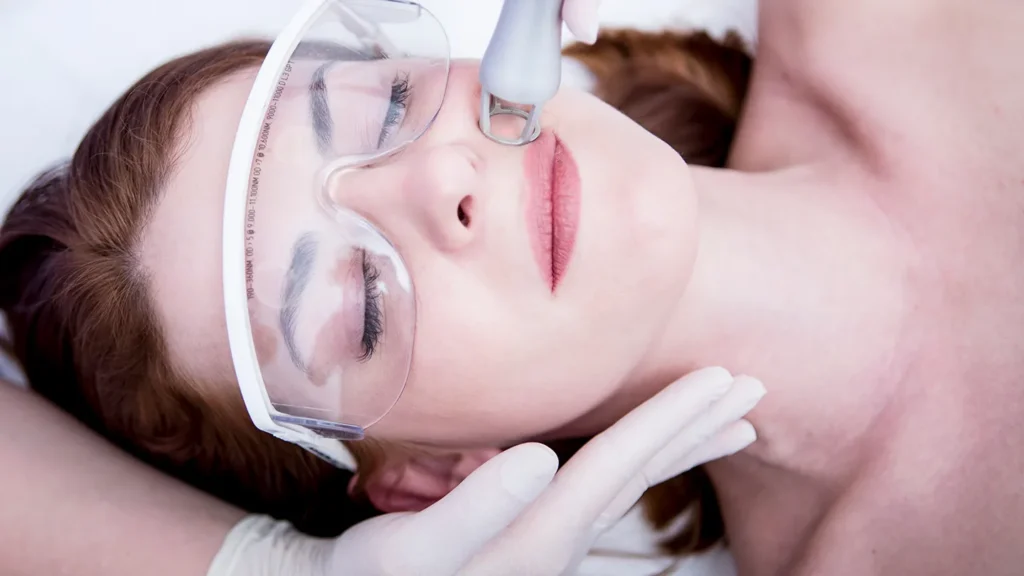
Lasers work best on problems in the skin itself. Common reasons people consider treatment include:
- fine lines and rough or uneven texture
- sun damage, age spots and patchy pigmentation
- acne scarring and post-acne marks
- thread veins, spider naevi and small vascular marks
Different concerns often need different lasers or settings, so the right one is chosen after your skin has been assessed. The laser treatment page sets out the conditions treated at this practice.
What It Cannot Do
Laser improves the quality of the skin, not its position. It will not lift loose or sagging skin, and it does not replace lost volume in the cheeks or around the mouth.
If your main concern is deeper folds or hollowing, dermal fillers or a surgical option may be discussed instead. Deep “ice pick” acne scars also tend to respond less well to laser alone.
What Happens on the Day
Treatment is carried out in clinic, with no theatre time or hospital stay. A numbing cream is applied first, and cooling is used during treatment. Most people describe each pulse as a brief snap or warmth on the skin.
| Detail | At this practice |
|---|---|
| Treatment time | Around 30 minutes |
| Anaesthetic | Local (topical numbing cream) |
| Hospital stay | Not required |
| Return to work | Depends on the laser used |
| Review appointment | At 2 to 4 weeks |
Recovery and Aftercare
Straight after treatment the skin usually feels warm and looks flushed, a bit like mild sunburn. How it settles from there depends on the laser, but a lighter treatment often follows a pattern like this.
| Stage | What to expect |
|---|---|
| Day of treatment | Warmth and redness, keep the skin cool and out of the sun |
| Days 1 to 3 | Redness and mild swelling easing, some crusting or flaking possible |
| Days 4 to 10 | Crusting lifts and redness fades, by day 7 in most cases |
| Weeks 2 to 4 | Review of how your skin has responded |
| Months 3 to 6 | Changes linked to collagen judged over this period |
Deeper ablative treatments take longer. The skin may weep and peel for the first week, and pinkness can last several weeks after the surface has healed, so it is worth planning time off work and social plans around it.
Why sun protection matters so much
Freshly treated skin is very sensitive to UV. Avoiding the sun before treatment and using a high-factor sunscreen every day afterwards lowers the risk of pigmentation problems. Recently tanned skin, including fake tan, usually means treatment is postponed.
How Many Sessions and When You See Results
Skin rejuvenation and acne scarring are usually planned as a course of three to six treatments, spaced four to six weeks apart. Isolated pigment spots and small vascular marks often need fewer sessions.
Pigment and vessel changes can show within one to two weeks as the body clears the treated tissue. Changes in texture and fine lines come from new collagen, so they are fairer to judge three to six months after a course. Results vary between people and cannot be guaranteed.
Risks and Who It May Not Suit
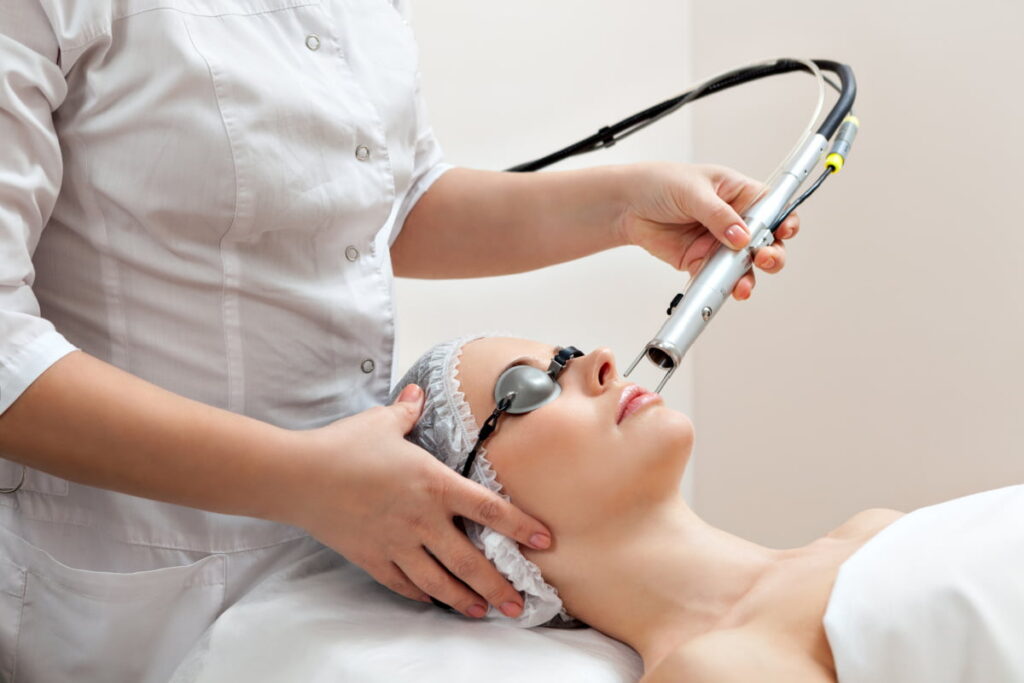
Redness, swelling and some flaking are expected rather than complications. Less common problems include infection, burns, scarring and changes in skin colour, either darker or lighter patches. Laser can also trigger a cold sore in people prone to them, so mention this at consultation.
Skin tone and laser choice
Darker skin tones carry a higher risk of pigment changes with some lasers, particularly ablative ones. That does not rule treatment out, but it does mean the laser type and settings need careful choosing, and a test patch is often sensible first.
When treatment is usually postponed
Treatment is usually delayed if there is active infection, an open wound or an acne flare in the area, or if you are taking a medicine that makes skin more sensitive to light. A full medical history is taken before anything is booked.
Choosing Where to Have It Done
Cosmetic lasers are powerful devices, and outcomes depend a great deal on the person using them. The Joint Council for Cosmetic Practitioners’ guidance on lasers recommends a face-to-face consultation with a qualified practitioner, a patch test, a cooling-off period of a few days before treatment, and getting the full cost of the course upfront.
It also warns against heavily discounted offers. Before treating pigmented marks, the practitioner should be able to recognise a lesion that needs checking first, and refer you for assessment of a suspicious skin lesion if needed.
What Laser Skin Resurfacing Costs in the UK
As general market context, UK clinics that publish prices list a full-face CO2 laser session at about £400 to £1,500 (prices UK clinics publish on their own websites, checked November 2026; market context, not Prof. Hindocha’s fee). Lighter non-ablative treatments are usually booked as a course of several sessions.
The final figure depends on the laser, the area treated, how many sessions you need and whether a test patch or consultation fee is charged separately. Ask for the total cost of the course rather than a price per session.
How It Fits With Other Skin Treatments
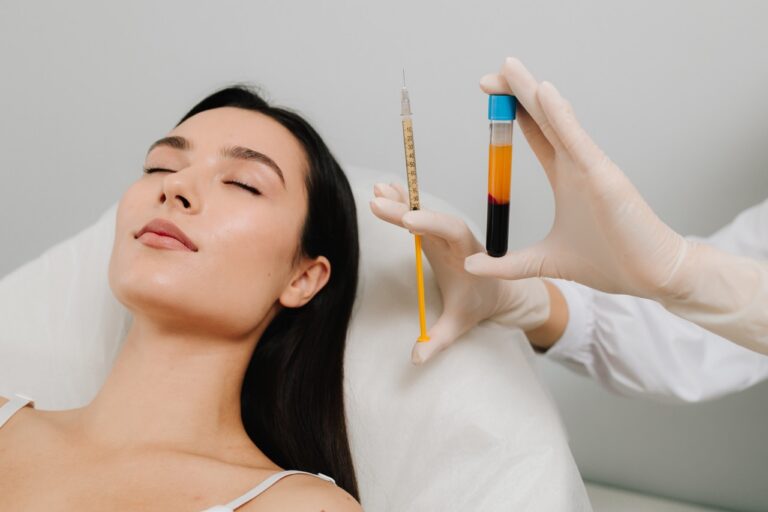
Laser is often one part of a plan rather than the whole of it. Chemical peels can also help with tone and pigmentation, PRP is sometimes used alongside laser to support healing, and Profhilo focuses on hydration and overall skin quality. When treatments are combined, the order and timing are planned so recovery periods do not overlap.
Frequently Asked Questions
What is laser skin resurfacing?
It is a clinic treatment that uses focused light energy to improve skin concerns such as fine lines, sun damage, pigmentation, acne scarring and uneven texture. The skin’s healing response, including new collagen, does much of the work over the following months.
Does laser resurfacing hurt?
A numbing cream is applied first and cooling is used during treatment. Most people describe a brief snap or warmth with each pulse. Deeper treatments are more uncomfortable than lighter ones.
How long is the downtime after laser?
It depends on the laser. Lighter non-ablative treatments usually mean a few days of redness. Deeper ablative treatments often need one to two weeks for the skin to heal, with pinkness that can last several weeks.
How many laser sessions will I need?
Skin rejuvenation and acne scarring are usually planned as three to six sessions, four to six weeks apart. Single pigment spots or small vascular marks often need fewer, and some deeper ablative treatments are done only once or twice.
Is laser safe for darker skin?
Darker skin carries a higher risk of pigment changes with some lasers, especially ablative ones. Suitable options exist, but the laser and settings must be chosen carefully after a skin assessment, often with a test patch first.
Can laser tighten sagging skin?
Laser can improve skin texture and firmness slightly through new collagen, but it does not lift loose or sagging skin. That usually needs a different approach, which can be discussed at consultation.
If you would like an honest view on whether laser is the right fit for your skin, book a consultation with Prof. Hindocha to talk through your concerns and the options that suit them. The full range is listed under non-surgical treatments.
This article is for general information only and does not constitute medical advice. Individual results vary, and suitability for any procedure can only be confirmed following an in-person consultation with a qualified, registered clinician.