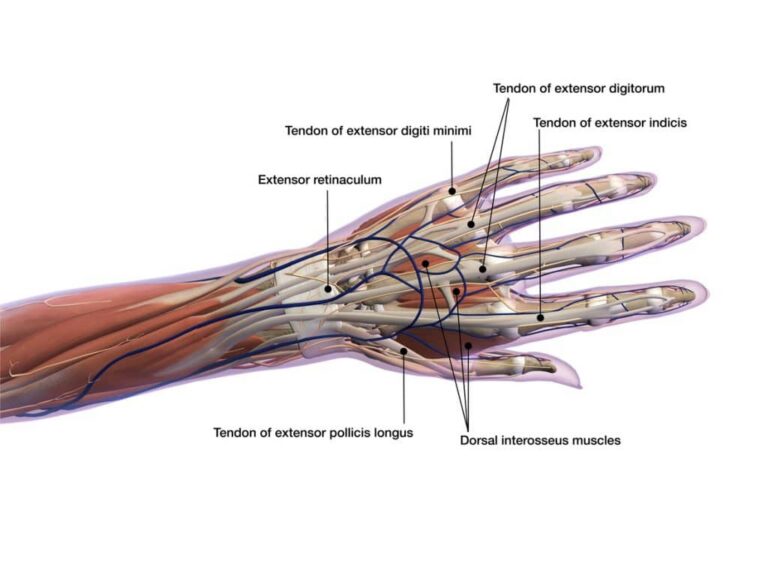
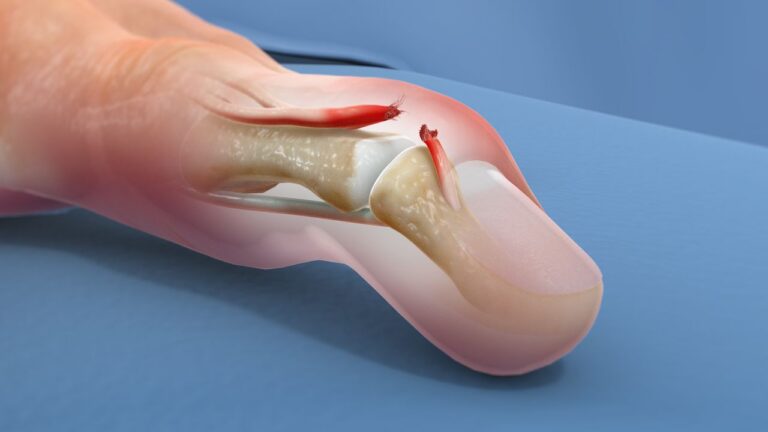
A jersey finger injury happens when the tendon that bends the fingertip tears away from the bone, leaving you unable to curl the tip of the finger down. It is time-sensitive, because the torn tendon retracts and scars if it is left, and the best results come from repair within days rather than weeks. Prof. Sandip Hindocha is a consultant plastic and hand surgeon who treats tendon injuries of the hand.
What Jersey Finger Is
The flexor digitorum profundus tendon runs along the palm side of the finger and bends the tip joint. In a jersey finger, that tendon is pulled off its attachment on the fingertip bone.
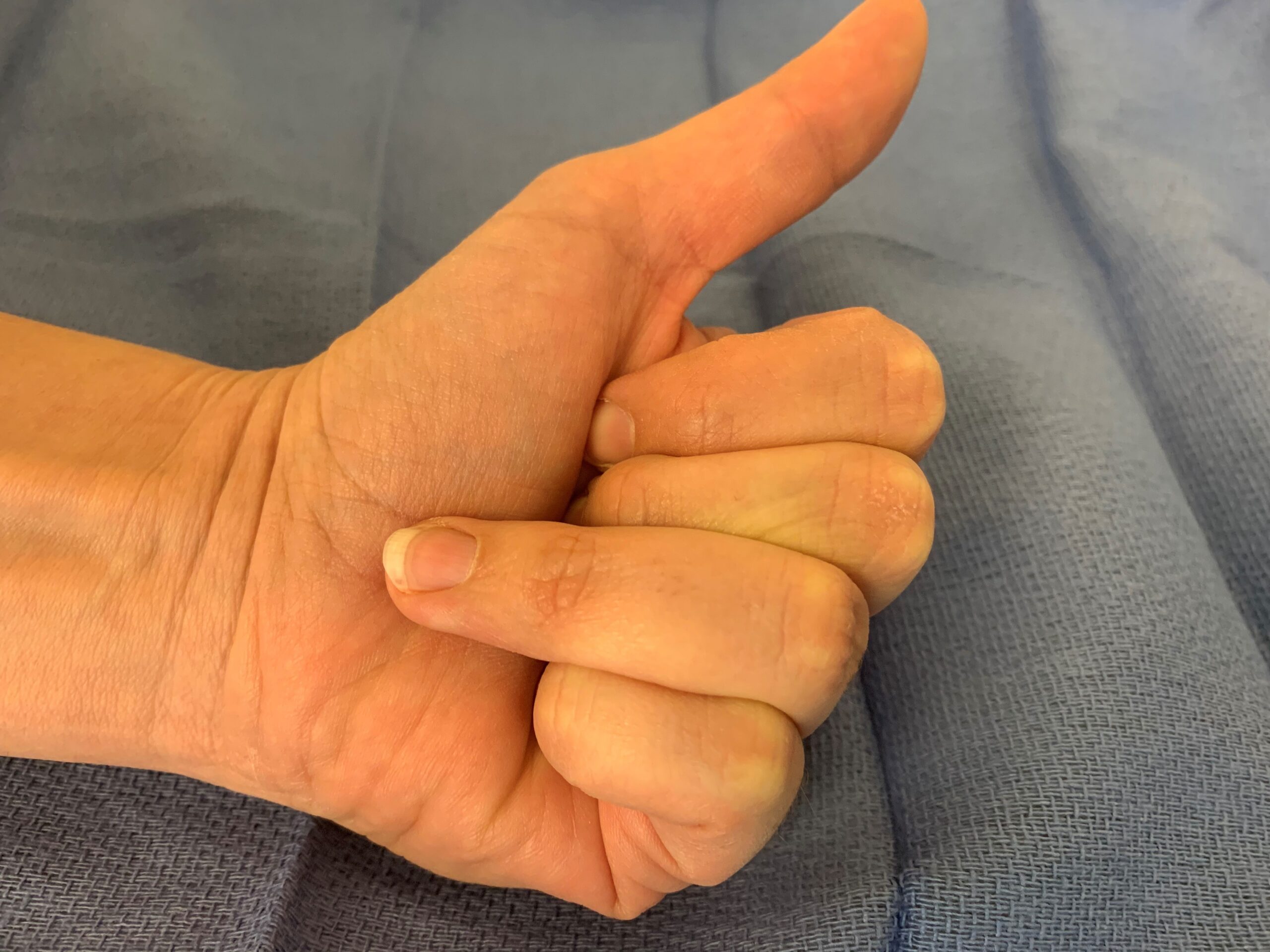
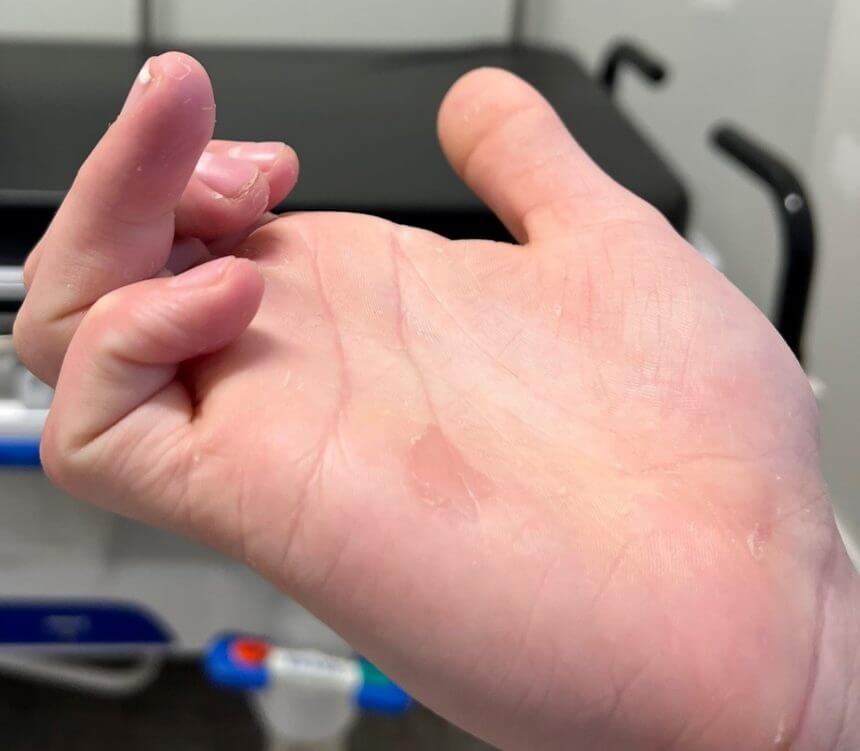
The result is a finger that cannot actively bend at the end joint. The rest of the finger often still moves, which is why the injury is easy to underestimate and sometimes mistaken for a sprain.
How a Jersey Finger Injury Happens
It happens when a finger is forced straight while it is gripping hard. The classic story is a player catching an opponent’s jersey during a tackle, which is where the name comes from. It can also follow a fall, a slipped grip on a rope or a ledge, or a finger caught on a moving object.
The ring finger is by far the most commonly affected, and a StatPearls review of the condition puts it at about three in four cases.
Signs You Should Get It Checked
After a forceful pull on a gripping finger, the signs to look for are:
- you cannot bend the tip joint, even gently, and the fingertip stays straight when you make a fist
- pain and tenderness on the palm side of the finger
- swelling along the finger, and sometimes a tender lump in the palm where the tendon end has retracted
- pain when you grip or try to bend the fingertip against resistance
Do not wait for the swelling to settle before getting it looked at. A finger that cannot bend at the tip after a grip injury needs an assessment from a hand specialist as soon as possible.
How Severe It Is, the Three Grades
Jersey finger is graded by how far the torn tendon has pulled back, because that sets both the urgency and the type of repair. A rarer fourth pattern, combining a fracture with a tendon avulsion, is also described in the medical literature.
| Grade | What has happened |
|---|---|
| Grade I | Tendon has retracted into the palm and its blood supply is disrupted, the most time-sensitive pattern |
| Grade II | Tendon is held at the middle finger joint, with its blood supply preserved, giving slightly more time |
| Grade III | A fragment of bone comes away with the tendon and is caught at the fingertip end, visible on X-ray |
Why Timing Matters So Much
Once the tendon has torn away, it is under constant tension and keeps retracting. It then begins to scar in its shortened position, and that process cannot be reversed.
For the most retracted injuries, repair within about seven to ten days gives the best chance of reattaching the tendon directly. The same StatPearls review notes that surgery within ten days is linked with excellent patient-reported outcomes. Later repairs can still be possible, but they are harder and may need a different, staged approach.
Can It Heal Without Surgery
Once the tendon has pulled away from the bone and retracted, it cannot heal back onto the bone on its own. Splinting and therapy alone are only occasionally appropriate, for very minor injuries.
Left untreated, the usual outcome is a fingertip that cannot bend and a finger that becomes stiffer over time. That matters most for people who rely on grip for work, a trade or sport.
What the Surgery Involves
The surgeon makes an incision along the palm and the finger to find the retracted tendon end. The tendon is brought back to its correct position and reattached to the fingertip bone, using sutures passed through the bone or a small bone anchor. When a bone fragment is involved, it is fixed back in place, often with a screw or wire.
| Detail | At this practice |
|---|---|
| Surgery time | About 1.5 hours |
| Anaesthetic | Local or general |
| Hospital stay | Day case, with no drains |
| Splint | Six to eight weeks |
The exact technique is chosen after an examination, depending on the grade and how far the tendon has moved. The jersey finger surgery page sets out the options in more detail.
Recovery Week by Week
| Stage | What to expect |
|---|---|
| Week 1 | Tendon reattached, protective splint fitted, wound reviewed |
| Weeks 2 to 4 | Protected, supervised movement exercises begin with the splint kept on |
| Weeks 4 to 8 | Splint comes off in this phase, with strengthening and flexion exercises building up |
| Weeks 8 to 12 | Return to light and moderately heavy work is usually possible |
| After 12 weeks | Contact sport once grip strength and movement are confirmed by your therapist |
The repaired tendon is fragile in the early weeks, so the splint and the physiotherapy plan work together. One protects the repair and the other prevents the scar tissue that causes stiffness. Rushing back to sport is the commonest way to put the repair at risk.
Possible Risks
As with any hand surgery, there are risks, including infection, stiffness from scar tissue, and the repair failing. Re-rupture of the repair usually means a second, more complex operation with a less predictable result, which is why following the rehabilitation plan closely matters.
Another risk is that pulling the tendon forward too far can limit how well the neighbouring fingers bend, so the amount of advancement is judged carefully at surgery.
If the Injury Was Missed or Seen Late
Many jersey finger injuries are missed at first because the finger looks only mildly hurt. If it is seen weeks or months later, direct repair may no longer be possible, and options can include a staged tendon graft or fusing the end joint, depending on how stiff the finger is.
The back-of-finger counterpart is described in the mallet finger article, and wider cuts and ruptures are covered under flexor and extensor tendon injuries. Other problems are listed across hand surgery.
Frequently Asked Questions
What is jersey finger?
It is a tear of the flexor tendon from the bone at the fingertip, which stops you actively bending the end joint of the finger.
What causes jersey finger?
A finger being forced straight while it is gripping, such as catching a jersey in a tackle or a grip slipping under load.
Can jersey finger heal on its own?
Rarely. Once the tendon has retracted it cannot reattach to the bone without surgery, and the finger usually stays unable to bend at the tip.
How soon does jersey finger need surgery?
As soon as possible. The most retracted injuries are best repaired within about seven to ten days, before the tendon scars and shortens.
How long is recovery after jersey finger surgery?
A splint is worn for six to eight weeks, with light work usually possible at eight to twelve weeks and contact sport only once grip and movement are confirmed.
Can I play sport again after jersey finger?
Many people do, provided the repair is done early and rehabilitation is followed closely, though how much grip and movement return varies from person to person.
If you have hurt a finger and cannot bend the tip, book an urgent assessment with Prof. Hindocha, because the window for a straightforward repair is short.
This article is for general information only and does not constitute medical advice. Individual results vary, and suitability for any procedure can only be confirmed following an in-person consultation with a qualified, registered clinician.