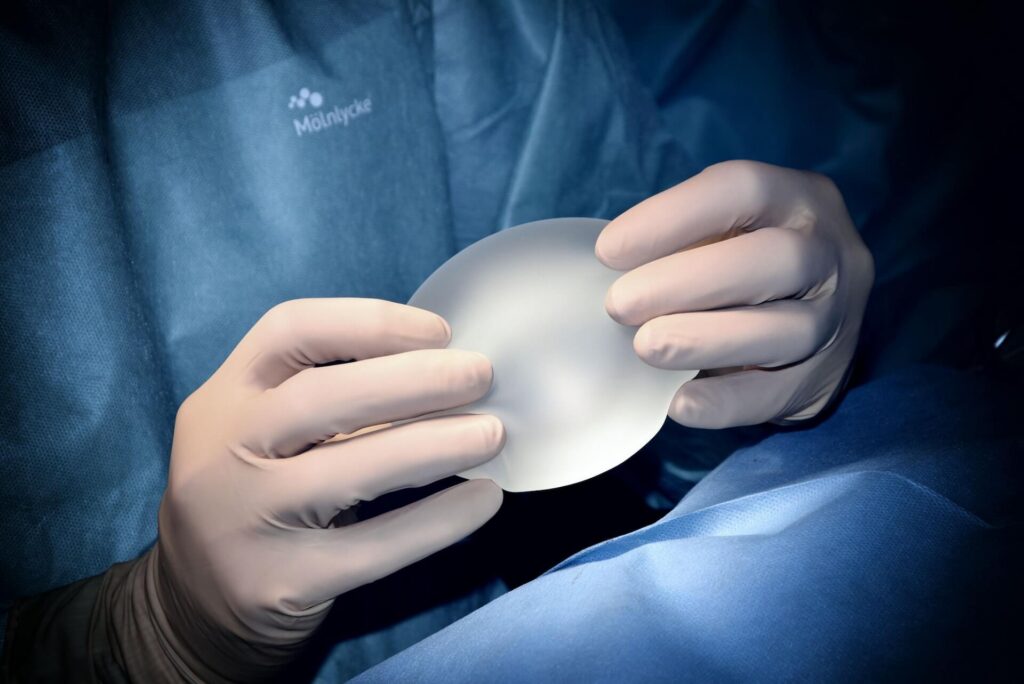
Implant reconstruction after mastectomy rebuilds the shape of the breast with a silicone implant, sometimes after a temporary tissue expander has stretched the skin first. It is a shorter operation with a quicker recovery than rebuilding the breast from your own tissue, and there is no second scar elsewhere on the body. The trade-off is that an implant is a device, so it can develop problems over time and may need further surgery later.
How Implant-Based Reconstruction Works
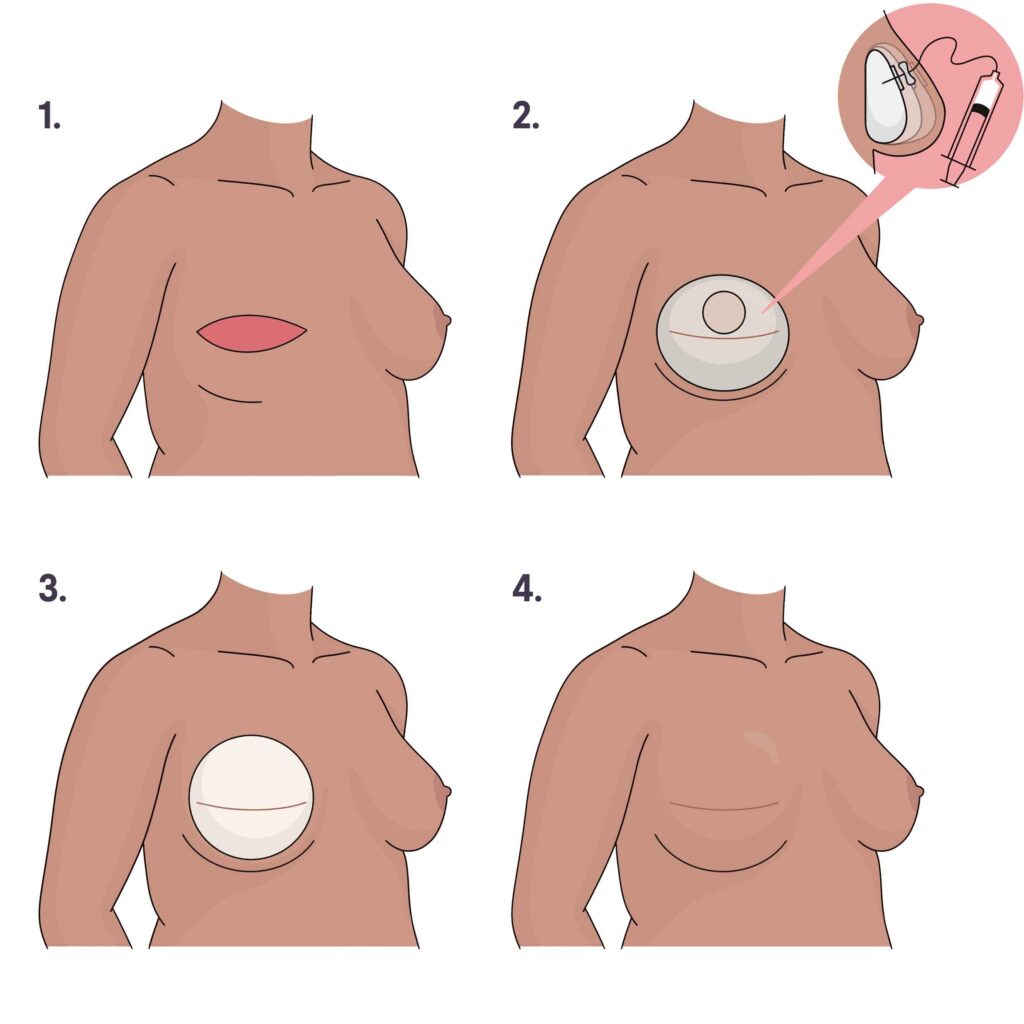
There are two main routes, and which one you have depends mostly on how much skin is left after the mastectomy.
Direct-to-implant, in one stage
The permanent implant goes in during the same operation as the mastectomy. This avoids a second operation and works best when a skin-sparing or nipple-sparing mastectomy leaves enough healthy skin to cover the implant comfortably.
Tissue expander first, then an implant
A tissue expander is a temporary, adjustable implant. It is filled with salt water a little at a time at short outpatient appointments, often every two to three weeks, gradually stretching the skin. Each fill takes only a few minutes.
Once the skin has stretched enough, a second, shorter operation swaps the expander for a permanent silicone implant. NHS units commonly do this exchange several months to a year after the first operation, and later if radiotherapy or chemotherapy is part of your treatment.
Where a supporting mesh fits in
Many reconstructions use an acellular dermal matrix, or ADM. This is a sheet of processed tissue, usually from pig or cow, that acts as an internal sling to hold the implant in position and shape the lower part of the breast. Synthetic meshes are an alternative, and your surgeon will explain which they use and why.
Who Implant Reconstruction Suits
It suits many people having a mastectomy for breast cancer or to reduce their risk. It is often a good fit if you would rather avoid a scar on the tummy, back or thigh, if you are slim with little spare tissue to use, or if you want a shorter operation and recovery.
You are more likely to be a good candidate if you have enough healthy skin at the mastectomy site, are in good general health, and do not smoke or can stop well before surgery. Smoking, diabetes and a higher BMI all raise the risk of wound problems and infection around an implant.
It can be less suitable if the chest has already had radiotherapy, because treated skin stretches less well and heals less reliably. In that situation own tissue reconstruction is often discussed instead.
Implant or Your Own Tissue
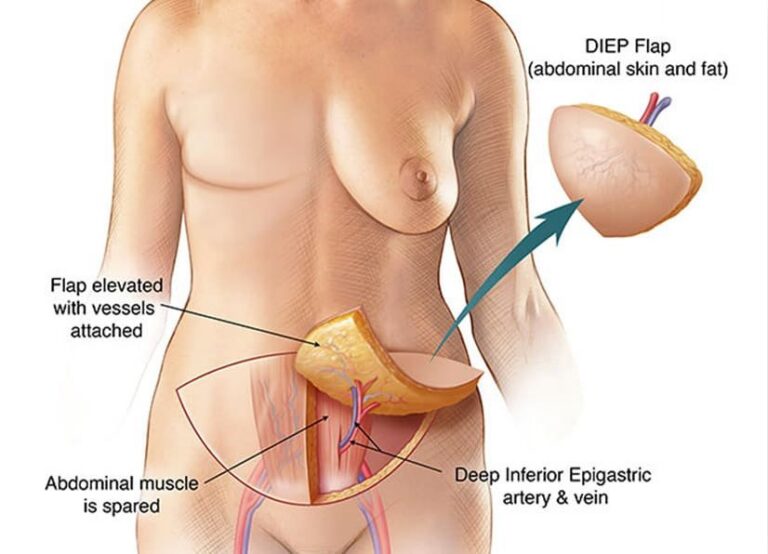
The main alternative is a flap reconstruction such as DIEP flap surgery, which rebuilds the breast from lower abdominal skin and fat. The broad differences look like this.
| Factor | Implant-based | DIEP flap |
|---|---|---|
| What rebuilds the breast | A silicone implant, sometimes after an expander | Your own abdominal skin and fat |
| Operation length | Around 4 hours with Prof. Hindocha | Around 8 hours with Prof. Hindocha |
| Hospital stay | Usually 1 to 3 days | Usually 3 to 5 days |
| Second scar | None | Low abdominal scar |
| Number of operations | One or two, more if refinements are needed | Usually one main operation plus refinements |
| Over time | Implant may need replacing or revising | Ages with you like natural tissue |
Neither is better for everyone. A wider comparison of every approach, including timing, is in this overview of options after mastectomy.
Timing Around Your Cancer Treatment
Reconstruction can be immediate, at the same time as the mastectomy, or delayed until months or years later. The decision is made with your breast cancer team, because other treatment shapes what is safest.
Radiotherapy has the biggest effect. It can harden and tighten the tissue around an implant, so some teams place an expander first and only fit the permanent implant once radiotherapy has finished and the skin has settled, often 6 to 12 months later. Chemotherapy can also delay the exchange because it raises the risk of infection for a while.
If radiotherapy is likely, ask how it will change your plan before you decide. It is one of the most common reasons people end up with a different reconstruction from the one they first expected.
What Happens During Surgery
The operation is done under general anaesthetic and, with Prof. Hindocha, takes around four hours including the reconstruction. The implant or expander is usually placed either in front of or behind the chest muscle, often supported by ADM.
A drain is placed to remove fluid, and some people go home with it still in. Most people stay in hospital for one to three days, with a first follow-up within a week.
If you have the two-stage approach, the later expander-to-implant exchange is a much shorter operation and recovery from it is usually quicker.
Recovery After Implant Reconstruction

Recovery is generally quicker than after flap surgery, as there is only one surgical site. These stages are a general guide and your own timeline will depend on the mastectomy and any other treatment.
| Stage | What to expect |
|---|---|
| Days 1 to 3 | Hospital stay, drain managed |
| Week 1 | First follow-up, light activity at home |
| Weeks 2 to 4 | Many return to lighter work and daily activity |
| Week 6 | Strenuous exercise and heavy lifting, once cleared |
| 3 months and beyond | Implant settles into its final position |
A supportive sports bra is worn day and night for around four to six weeks. Driving usually waits until you can wear a seatbelt and react quickly without pain, which can take up to around four weeks. A physical job may need longer off than a desk-based one.
Risks and Complications
Implant reconstruction is well established, but its risks are different from those of cosmetic breast implants because the skin over the implant is thinner after a mastectomy.
Infection is the main early concern. Royal Berkshire Hospital’s reconstruction overview puts serious infection at around 7 to 10 in 100 with implant techniques, with a much higher risk in smokers, people with diabetes and those who are overweight. A severe infection can mean the implant has to be removed and replaced later, once healed.
Later on, the natural scar capsule around the implant can tighten, known as capsular contracture. NHS leaflets put a significant tightening at up to around 10 in 100, and it is much more likely after radiotherapy and in smokers. Other risks include the skin over the implant breaking down, the implant moving out of position, rippling and fluid collecting around it.
There is also a rare lymphoma linked to breast implants, called BIA-ALCL. University Hospitals Plymouth’s implant reconstruction leaflet puts it at about 1 in 24,000 to 1 in 12,000. It usually shows as new swelling of the breast years after surgery, and is very treatable when found early.
Living With the Implant Long Term

Will the implant need replacing?
Implants do not have a fixed expiry date and do not need routine replacement if there are no problems. Over a lifetime, though, many people need further surgery at some point, for example for capsular contracture, a change in shape or a damaged implant. The breast implant exchange page covers what a replacement operation involves.
Your implant details are recorded on the national Breast and Cosmetic Implant Registry, so you can be contacted if a safety issue ever arises with that product. Weight change can also affect how the reconstructed breast matches the other side over the years.
Symmetry and nipple reconstruction
Reconstruction is often finished in stages. Once the implant has settled, usually after three to six months, a lift, reduction or augmentation of the other breast can improve the match. Fat transfer can soften edges or rippling, and a nipple can be rebuilt from local skin and then tattooed to recreate the areola.
NHS or Private Reconstruction
Breast reconstruction after mastectomy for cancer is available on the NHS, including implant reconstruction, and you are entitled to discuss reconstruction with your surgical team. Which techniques are offered and waiting times vary between hospitals.
Some people go private for more control over timing, surgeon choice or continuity of care, and private medical insurance often covers reconstruction after cancer. Self-funded costs depend on whether one or two stages are needed, the implant and any mesh used, the hospital stay and later refinements, so a personal quote is given after consultation. Some background on how private surgical fees are worked out may help when comparing quotes.
Details of Prof. Hindocha’s approach, including direct-to-implant and expander techniques, are on the implant-based reconstruction page, with every technique gathered under breast reconstruction.
Frequently Asked Questions
What is implant reconstruction after mastectomy?
It rebuilds the breast using a silicone implant, either placed during the mastectomy or after a temporary tissue expander has stretched the skin. It avoids a second scar elsewhere on the body and has a shorter operation and recovery than own tissue reconstruction.
What is a tissue expander?
A tissue expander is a temporary, adjustable implant placed under the skin and gradually filled with salt water at short outpatient appointments. Once the skin has stretched enough, it is swapped for a permanent implant in a second, shorter operation.
How long is recovery after implant breast reconstruction?
Most people stay in hospital for one to three days and return to lighter work and daily activity within two to four weeks. Strenuous exercise and heavy lifting usually wait until around six weeks, and the implant settles over about three months.
Can I have implant reconstruction if I need radiotherapy?
Sometimes, but radiotherapy raises the risk of complications such as capsular contracture. Some teams place an expander first and fit the permanent implant after radiotherapy, while others recommend delayed or own tissue reconstruction instead.
Do reconstruction implants need replacing?
Not routinely. Implants have no fixed expiry date and can stay in as long as there are no problems. Many people do need further surgery at some point in their lifetime, for example for capsular contracture or a change in shape.
Is implant reconstruction after mastectomy available on the NHS?
Yes. Reconstruction after mastectomy for cancer, including implant-based techniques, is available on the NHS, though options and waiting times vary by hospital. Private care is also available and is often covered by private medical insurance after cancer.
If you are weighing up reconstruction, book a consultation with Prof. Hindocha to talk through whether an implant suits your body and treatment plan, and how it compares with using your own tissue.
This article is for general information only and does not constitute medical advice. Individual results vary, and suitability for any procedure can only be confirmed following an in-person consultation with a qualified, registered clinician.