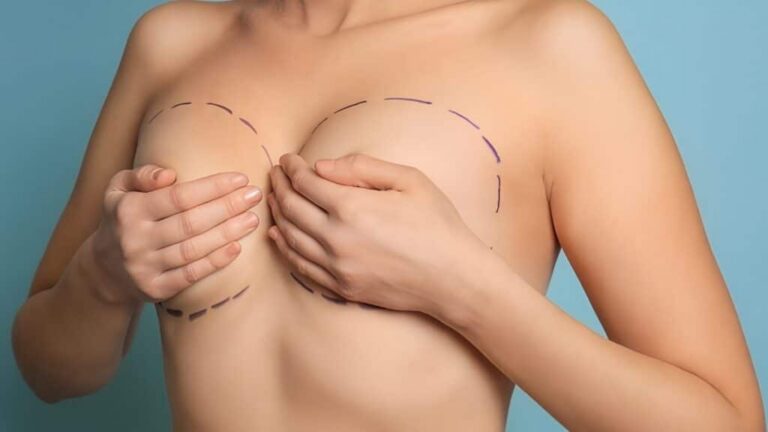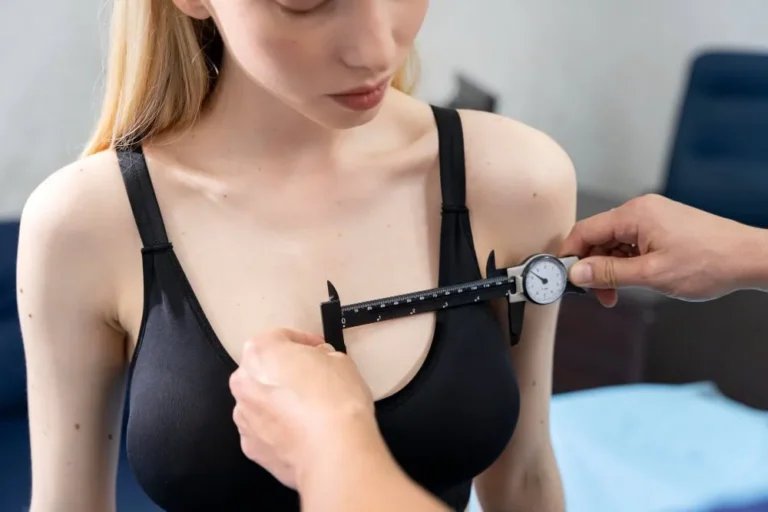
Capsular contracture is a tightening of the scar tissue that forms around a breast implant. Your body creates a soft capsule around any implant, and in capsular contracture symptoms appear when that capsule becomes thick and tight enough to squeeze the implant, making the breast firm, painful or misshapen.
The right treatment depends on how tight the capsule is and what you want from your breasts now, and Prof. Hindocha talks through each option at consultation.
What Capsular Contracture Actually Is
Every implant is surrounded by a thin capsule of scar tissue, and in most people it stays soft and goes unnoticed. In capsular contracture it thickens and shrinks, and the implant is held tighter than it should be.
It can appear within months of surgery or years later, and it can affect one breast or both. It is the most common long-term complication of implant breast surgery, according to Breastcancer.org’s overview of capsular contracture.
Capsular Contracture Symptoms to Look For

The changes tend to be gradual, so many people only notice when they compare one breast with the other or look back at old photos.
| What You Notice | What It Can Mean |
|---|---|
| Breast feels firmer | The capsule is starting to tighten around the implant |
| Change in shape | The breast looks rounder, higher or more distorted than before |
| One side different from the other | Contracture often affects one breast more than the other |
| Pain or tightness | The capsule is pressing on the implant and surrounding tissue |
| Less movement in the breast | A tight capsule holds the implant firmly in place |
These are prompts to get checked, not a diagnosis. Firmness and shape change can have other causes, including problems with the implant itself.
Understanding the Baker Grades
Surgeons grade severity using the Baker scale, from I to IV. It is a useful shorthand, though it is partly based on how the breast looks and feels, so two clinicians may not always grade the same breast identically.
| Grade | Typical Description |
|---|---|
| Grade I | Breast is soft and looks natural |
| Grade II | Slightly firm, but looks normal |
| Grade III | Firm, with visible change in shape |
| Grade IV | Hard, often painful, with clear distortion |
Grades III and IV are the ones that most often lead to a conversation about surgery, particularly when there is discomfort.
Why It Happens
The honest answer is that the exact cause is not fully understood, and the reasons some people develop it while others do not are unclear. Several factors are linked to a higher risk.
Factors Linked to a Higher Risk
Bacterial biofilm on the implant surface, bleeding or fluid collecting around the implant after surgery, and a rupture of a silicone implant are all associated with contracture. A personal tendency to scar heavily or a history of autoimmune disease may also play a part.
Radiotherapy and Implant Position
Previous radiotherapy to the chest significantly raises the risk. Placing the implant in front of the chest muscle is also thought to carry a slightly higher risk than placing it behind, though the choice depends on your anatomy and goals.
Treatment Options

Mild firmness without discomfort may simply be monitored. When treatment is needed, the choice is between keeping an implant in place or taking it out, and it is tailored to your anatomy.
| Approach | What It Involves |
|---|---|
| Capsulotomy | Cutting the capsule to release the tension, sometimes with the implant replaced |
| Capsulectomy | Removing the capsule along with the implant, usually followed by a new implant |
| Implant exchange | Replacing the implant, often alongside work on the capsule |
| Implant removal | Taking the implant and capsule out without replacing them |
Many people choose to replace the implant, which is covered under breast implant exchange, and the wider reasons for doing so are set out in the post on when and why an exchange might be needed.
If you would rather not have implants again, removal with a lift is one option, and the removal cost and before-after post explains what shapes the price. Where the breast also needs lifting, exchange combined with a lift is another route.
Contracture can come back after any implant-keeping procedure if the body reacts to the implant in the same way, so it is worth discussing recurrence openly before deciding.
What Recovery Involves
Recovery varies with what is done, and a combined operation takes longer than a simple release. For a standard implant exchange, the practice lists surgery of around three hours under general anaesthesia as a day case, with no drains and a sports bra worn for about six weeks.
Most people return to desk-based work within two to three weeks and to full exercise at about six weeks. Your own timeline is confirmed at consultation, because capsule work can be more involved.
Seeing a Surgeon About a Firm or Changing Breast
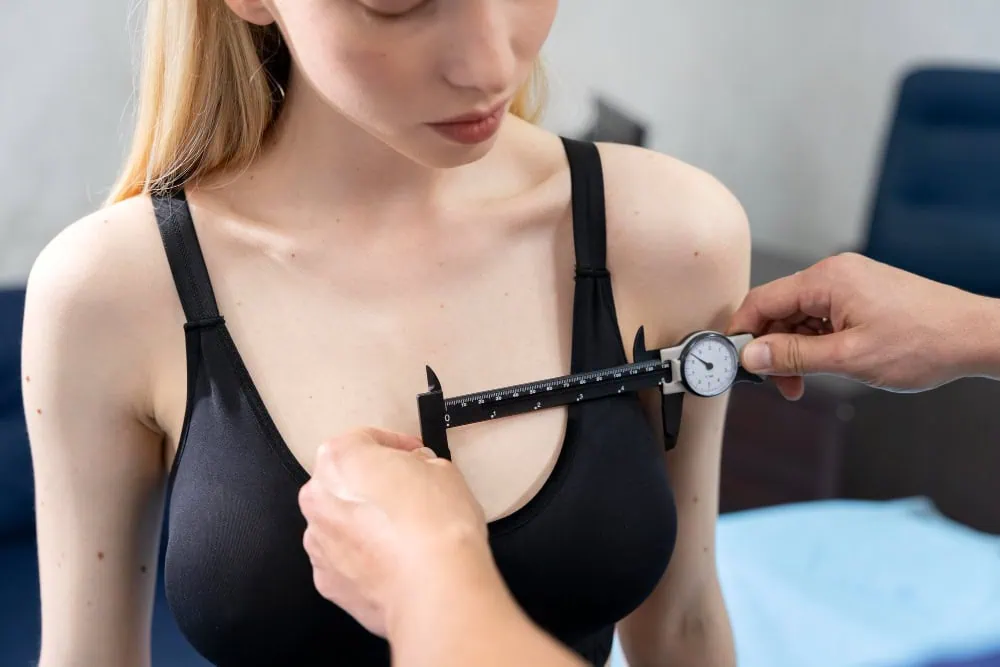
A consultation starts with your history, including when the implants were placed and when you first noticed a change, followed by a physical examination. Further tests may be suggested if there is any doubt about the implant itself. More general background on implant lifespan and safety is in the post on breast implant safety and longevity.
Please don’t wait if a breast suddenly becomes hard, swollen, red or very painful, as that needs prompt medical attention rather than a routine appointment.
Frequently Asked Questions
What is capsular contracture?
It is a firm tightening of the scar tissue that the body naturally forms around a breast implant. When that capsule squeezes the implant, the breast can feel hard, look different or become uncomfortable.
How do I know if I have capsular contracture symptoms?
The usual capsular contracture symptoms are a breast that feels firmer than before, a change in shape or position, and sometimes pain or tightness. Only an examination, and sometimes imaging, can confirm whether the cause is the capsule or something else.
Can capsular contracture go away on its own?
Mild firmness may stay stable for a long time, but a tight capsule does not usually soften by itself once it has developed. If it is changing or causing discomfort, it is worth being assessed.
Is capsular contracture dangerous?
It is a recognised complication rather than an emergency, but it can cause pain and distortion, and sudden changes should be checked promptly. Hardness can also have other causes, such as an implant problem, which is why examination matters.
Can capsular contracture come back after surgery?
Yes. If the body continues to react to an implant in the same way, a new capsule can tighten again. Your surgeon can talk through what lowers that chance in your case, but no operation can promise it will not return.
What is the treatment for capsular contracture?
Treatment depends on the severity. Options include releasing the capsule, removing it along with the implant, replacing the implant, or removing the implant altogether.
If one of your breasts feels harder or looks different from the other, book a consultation with Prof. Hindocha for a clear assessment and an honest discussion of your options.
This article is for general information only and does not constitute medical advice. Individual results vary, and suitability for any procedure can only be confirmed following an in-person consultation with a qualified, registered clinician.