DIEP flap reconstruction rebuilds a breast after mastectomy using skin and fat from your lower abdomen, with no implant. The tissue is moved with its own small blood vessels, which are joined to vessels in the chest under a microscope, so the new breast is living tissue that feels soft and changes with your body. It is a long, specialist operation and not everyone is suitable. Prof. Sandip Hindocha, a consultant plastic surgeon with microsurgical training, carries out DIEP and free flap reconstruction privately.
What DIEP Stands For and How It Works
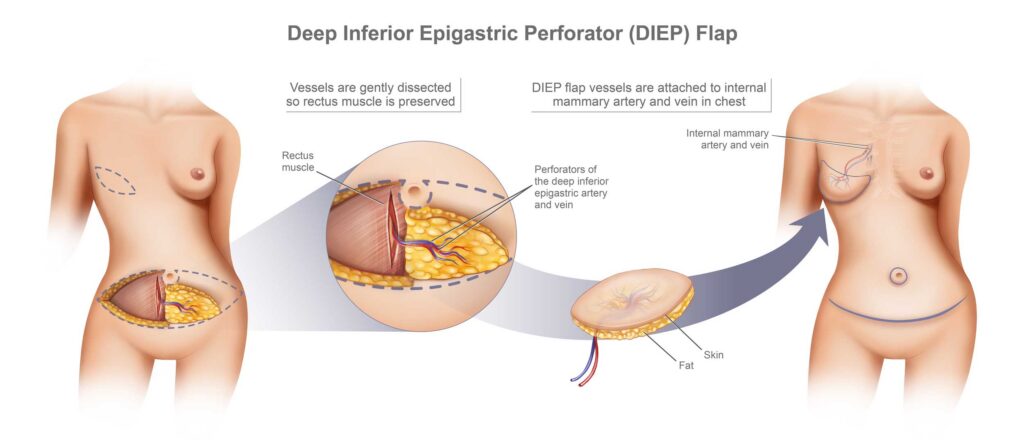
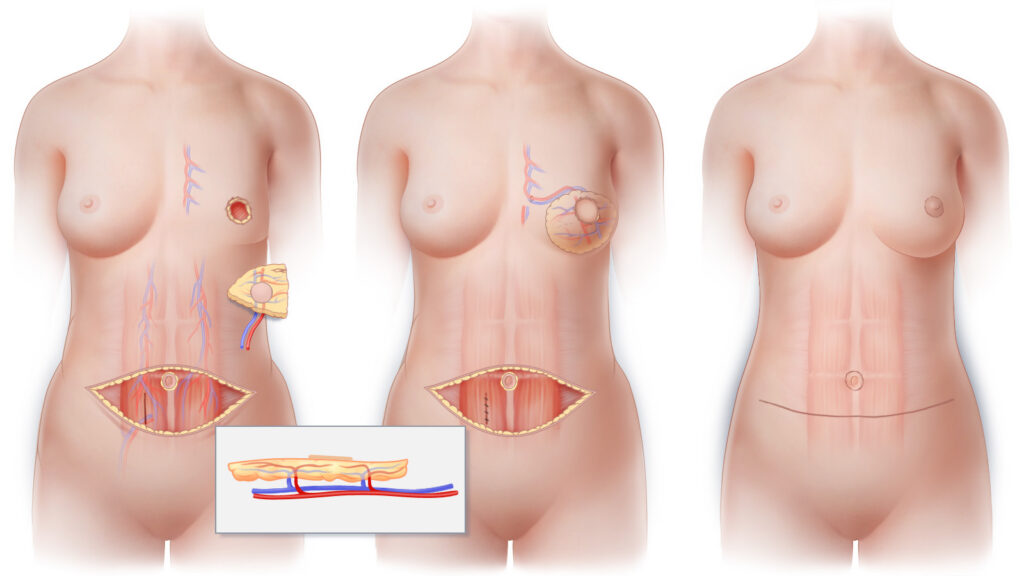
DIEP stands for deep inferior epigastric perforator. These are the small blood vessels that run up through the abdominal muscle to supply the skin and fat of the lower tummy.
The surgeon lifts an oval of lower abdominal skin and fat together with these perforator vessels, carefully separating them from the muscle so the muscle itself stays in place. The tissue is then moved to the chest, the vessels are reconnected to blood vessels there, and the flap is shaped into a breast.
Because the tissue is fully detached and reconnected, this is called a free flap. The vessels being joined are often only one to two millimetres across, which is why the operation is done under magnification by a surgeon trained in microsurgery.
Who DIEP Flap Surgery Suits
It is used for people who have had, or are about to have, a mastectomy for breast cancer or to reduce their risk. It is also an option when an earlier implant reconstruction has caused problems, or after radiotherapy has left the chest skin tight and less suited to an implant.
You are more likely to be a good candidate if you:
- have enough spare tissue on the lower abdomen to make a breast
- are in good general health and fit for a long general anaesthetic
- do not smoke, or can stop at least six weeks before surgery
- are at a stable weight and not planning a big change
- have not had abdominal surgery that may have damaged the vessels needed
Previous abdominal surgery does not always rule it out. A scan before surgery maps the perforator vessels so the surgeon can see what is usable. If the tummy is not suitable, tissue can sometimes come from the thigh or buttock instead, or an implant may be the better route.
DIEP Compared With Implant and TRAM Reconstruction
Most people weighing up DIEP are also considering an implant, and some will have heard of the older TRAM flap. This is how they broadly compare.
| Factor | DIEP flap | Implant-based | TRAM flap |
|---|---|---|---|
| What rebuilds the breast | Your own abdominal skin and fat | A silicone implant, often after an expander | Abdominal skin and fat with some muscle |
| Abdominal muscle | Left in place | Not affected | Part or all of one muscle taken |
| Operation length | Long, often 6 to 8 hours | Shorter | Long |
| Second surgical site | Yes, the lower abdomen | No | Yes, the lower abdomen |
| Long term | Ages with you, no implant to replace | Implant may need replacing in future | Ages with you, higher risk of abdominal weakness |
Implant-based reconstruction is a shorter operation with a quicker initial recovery, and it remains the right choice for many people. Implants can, though, develop problems such as capsular contracture, which own tissue reconstruction avoids.
A wider look at every technique, including timing, is set out in this overview of reconstruction options after mastectomy.
Immediate or Delayed Reconstruction
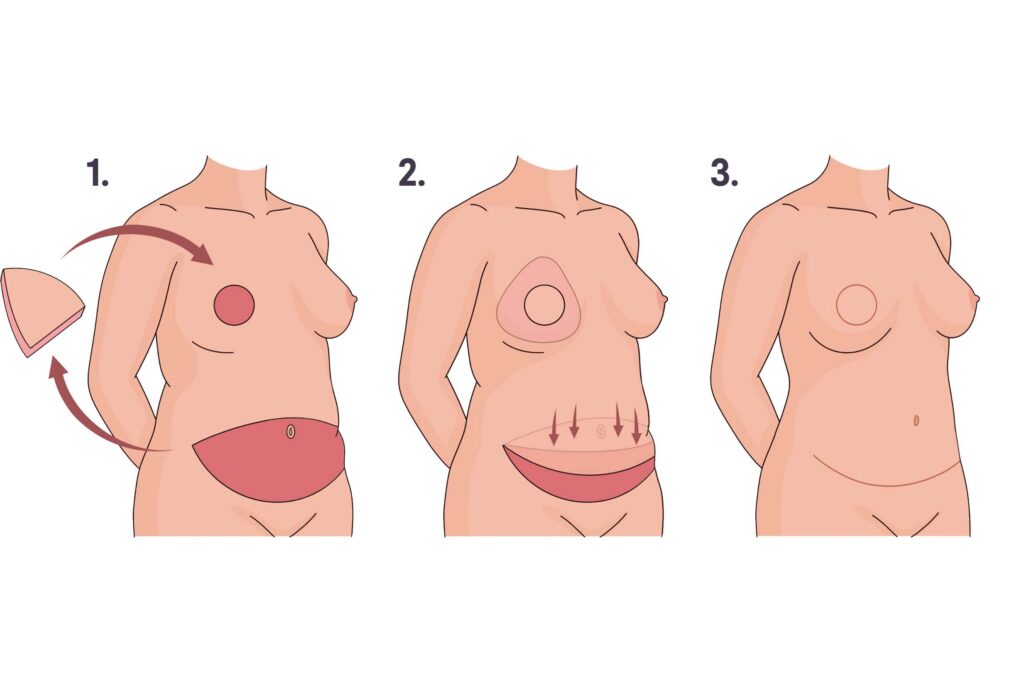
DIEP surgery can be done at the same time as the mastectomy, known as immediate reconstruction, or months or years later, known as delayed reconstruction. Both are common and neither is automatically better.
Timing is decided with your breast cancer team. If radiotherapy is likely after the mastectomy, many teams prefer to delay the flap, because radiotherapy can affect the reconstructed breast. NHS units commonly wait several months to around a year after radiotherapy has finished before a delayed DIEP, to let the skin settle.
Reconstruction can also be done in stages. The breast mound comes first, with nipple reconstruction and any symmetry adjustments to the other breast planned later once the shape has settled.
What Happens on the Day of Surgery
The operation is done under general anaesthetic. With Prof. Hindocha it typically takes around eight hours, reflecting the vessel mapping, the careful harvest and the microsurgical join. NHS leaflets quote 4 to 6 hours for one breast and 6 to 8 hours for both, so length varies with the case.
Drains are placed in the chest and abdomen to remove fluid. The abdomen is closed in a similar way to a tummy tuck, which is why many people notice a flatter lower tummy afterwards.
Flap monitoring in hospital
For the first day or two, nurses check the colour, warmth and blood flow of the new breast very often, at first every half hour or so. You are kept warm and well hydrated to support circulation. These checks matter because a problem with the joined vessels usually shows early, and it is most fixable when caught quickly.
The hospital stay is usually three to five days.
Recovery After DIEP Flap Reconstruction
This is a bigger recovery than an implant reconstruction, because there are two surgical sites. Most people feel tired for several weeks. The stages below are a general guide.
| Stage | What to expect |
|---|---|
| Days 1 to 5 | Hospital stay with close flap monitoring |
| Weeks 1 to 2 | Rest at home, drains managed, first and second week reviews |
| Weeks 2 to 3 | Desk-based or light work possible for some |
| Weeks 4 to 6 | Moderate activity resumes, garments worn to six weeks |
| Weeks 8 to 12 | Strenuous exercise and heavy lifting, once cleared |
| 6 to 12 months | Breast softens and settles into its final shape |
You will wear an abdominal binder and a supportive garment for around six weeks. Driving usually waits until you can wear a seatbelt comfortably and brake hard without hesitation, often four to six weeks. Return to work depends heavily on your job, and physical roles take longer.
The abdominal scar sits low, usually at or below the bikini line, and fades over 12 to 18 months.
Risks to Know About
DIEP is a major operation, and it is worth understanding the specific risks rather than just the general ones.
Flap failure
The most serious risk is the blood supply to the flap failing, which can mean a return to theatre and, rarely, losing the flap. St George’s Hospital’s DIEP patient leaflet puts complete failure at around 1 to 2 in 100, and other NHS units quote figures up to 5 in 100. Partial loss of a small area is more common than losing the whole flap.
Fat necrosis and the abdomen
Sometimes a little of the transferred fat does not survive and forms a firm lump in the breast. It is harmless but can feel worrying, so it is usually checked and sometimes removed.
Keeping the muscle intact lowers the risk of a hernia or abdominal bulge compared with the older TRAM flap, but it does not remove it entirely. Wound healing problems, seromas and changes in sensation on the abdomen and breast can also occur. Smoking and a higher BMI both raise the risk of complications.
Is DIEP Available on the NHS?
Yes. Breast reconstruction after mastectomy for cancer is available on the NHS, and many NHS plastic surgery units offer DIEP. Availability, waiting times and which techniques are offered vary between hospitals.
Some people choose private care for more control over timing, surgeon choice or continuity, and private medical insurance often covers reconstruction after cancer. Self-funded DIEP surgery is a significant cost. Published hospital prices vary widely and often leave out consultant and other fees, so Prof. Hindocha gives a written, itemised quote after consultation. It depends on whether one or both breasts are reconstructed, the length of stay and any later stages.
Some background on how private surgical fees are put together may help when comparing quotes.
Why Microsurgical Experience Matters
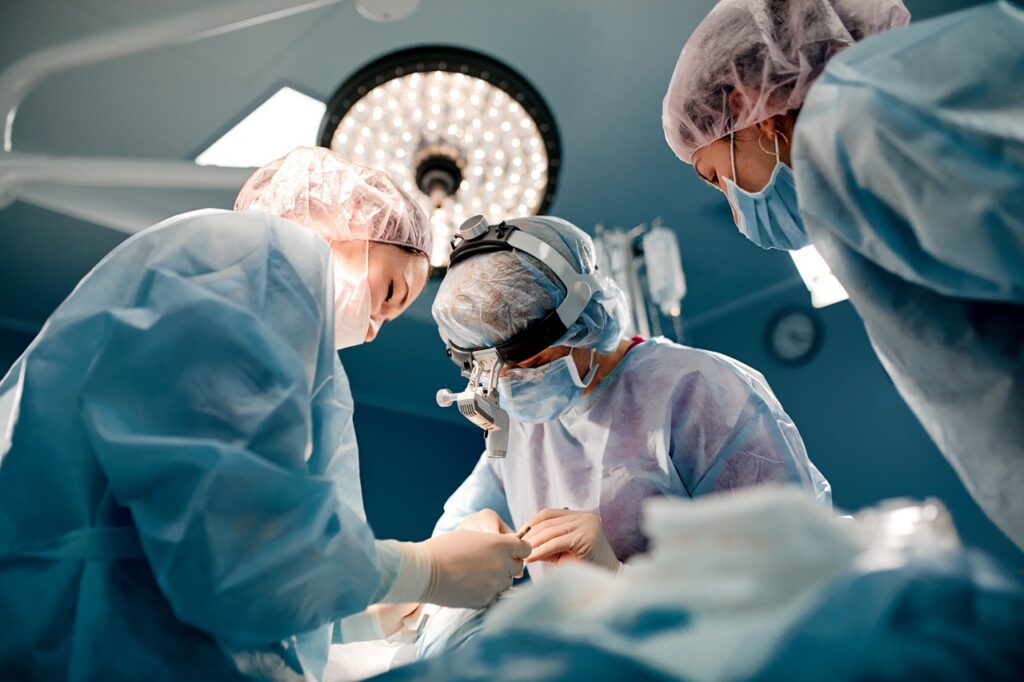
The success of a free flap depends on planning, the precision of the vessel join and the quality of care in the first few days. It is worth asking any surgeon how many flaps they perform, how they map vessels beforehand, how the flap is monitored after surgery and what happens if it needs to be rescued.
Prof. Hindocha maps the perforator vessels before every case and also takes on revision and secondary reconstruction. Details of his approach are on the DIEP and free flap surgery page, and the full range sits under breast reconstruction.
Frequently Asked Questions
What is DIEP flap reconstruction?
It is a way of rebuilding the breast after mastectomy using skin and fat from the lower abdomen, with no implant. The tissue’s small blood vessels are joined to vessels in the chest under a microscope, and the abdominal muscle is left in place.
How long does DIEP flap surgery take?
Usually between around 4 and 8 hours, depending on whether one or both breasts are being reconstructed and the complexity of the case. Prof. Hindocha typically allows around eight hours. The hospital stay is usually three to five days.
How long is recovery after a DIEP flap?
Many people return to light work after a few weeks and moderate activity by around six weeks. Strenuous exercise and heavy lifting usually wait until 8 to 12 weeks. The breast continues to soften and settle for 6 to 12 months.
What are the main risks of DIEP flap surgery?
The most serious is the flap’s blood supply failing, which NHS leaflets put at roughly 1 to 5 in 100 for complete failure. Other risks include firm lumps from fat necrosis, wound healing problems, an abdominal bulge or hernia and changes in sensation.
Can I have a DIEP flap after radiotherapy?
Yes, and own tissue reconstruction is often preferred after radiotherapy. Many teams wait several months to around a year after radiotherapy finishes before a delayed DIEP, so that the chest skin has time to settle.
Is DIEP flap surgery available on the NHS?
Yes. Reconstruction after mastectomy for cancer is available on the NHS, though which techniques are offered and waiting times vary by hospital. Some people choose private treatment, which private medical insurance often covers after cancer.
If you are considering reconstruction with your own tissue, book a consultation with Prof. Hindocha to find out whether DIEP suits your body and treatment plan, and how it compares with the other options for you.
This article is for general information only and does not constitute medical advice. Individual results vary, and suitability for any procedure can only be confirmed following an in-person consultation with a qualified, registered clinician.